
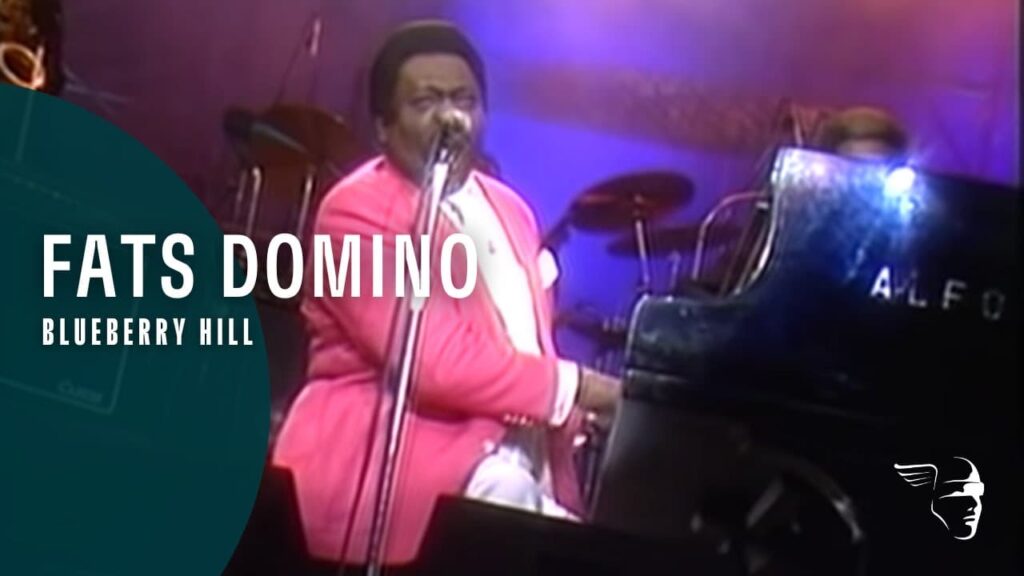
An Everlasting Sunset in the Garden of Memory: The Soulful Serenade of Fats Domino’s “Blueberry Hill.”
There are certain songs that do not merely play; they inhabit a space in our collective soul, evoking the hazy, golden glow of a summer evening that never quite ends. When Fats Domino sat down at his piano in 1956 to record his definitive version of “Blueberry Hill,” he wasn’t just performing a standard; he was capturing the very essence of nostalgia. Released on the Imperial label, this masterpiece became a cultural phenomenon, spending eleven weeks at number 1 on the Billboard R&B chart and peaking at number 2 on the Pop chart. For those of us who came of age during the mid-century, this track represents the pinnacle of the “New Orleans Sound” a perfect marriage of rhythm, blues, and an elegant, easy-going grace. It arrived at a time when the world was beginning to find its rock-and-roll heartbeat, yet Domino’s delivery remained rooted in a timeless, sophisticated charm that resonated with both the young and the wise.
The story behind “Blueberry Hill” is a fascinating journey through the American songbook. Originally written in 1940 by Vincent Rose, Al Lewis, and Larry Stock, the song had been recorded by many including Glenn Miller and Louis Armstrong long before Fats touched it. However, it was Domino’s insistence on recording it, despite the initial hesitation of his legendary producer Dave Bartholomew, that changed music history. During the recording session, Fats struggled with the lyrics, famously needing several takes to get the phrasing just right. The result was a recording that felt less like a rehearsed performance and more like a lived experience. To the sophisticated listener, the genius lies in the “rolling” piano triplets and the warm, slightly nasal tone of Fats’ voice, which transformed a traditional ballad into a rhythmic sanctuary of sound.
As we look back through the lens of our own decades, the meaning of “Blueberry Hill” deepens from a simple tale of lost love into a profound meditation on the permanence of memory. The lyrics speak of a promise made and a heart that stood still, set against a backdrop of a moonlit hill where “the willow played.”
“Though we’re apart, you’re part of me still / For you were my thrill on Blueberry Hill.”
For those who have navigated the long arcs of life, these words carry a poignant truth: our most formative loves never truly leave us; they become part of the internal landscape we carry forever. Domino’s performance is masterful because it lacks any hint of bitterness. Instead, there is a sense of immense gratitude a quiet joy in having experienced such a “thrill,” even if it now belongs to the past. He captures that specific, bittersweet realization that while the person may be gone, the hill, the moon, and the feeling remain etched in the spirit.
Revisiting this track today is a masterclass in high-fidelity emotion. From the iconic opening horn swell to the steady, comforting beat of the drums, the production reflects a time when music was built to last, designed for the warm resonance of a living room console or a late-night radio broadcast. For the discerning reader, “Blueberry Hill” serves as a bridge to a version of ourselves that was unburdened and full of hope. It reminds us of the power of a simple melody to transcend time, language, and geography. Fats Domino didn’t just sing about a hill; he created a destination where we can all go to remember the best versions of our hearts. It is a soulful, rhythmic embrace from a man who understood that the most enduring music is that which speaks to the beauty of having loved at all.