
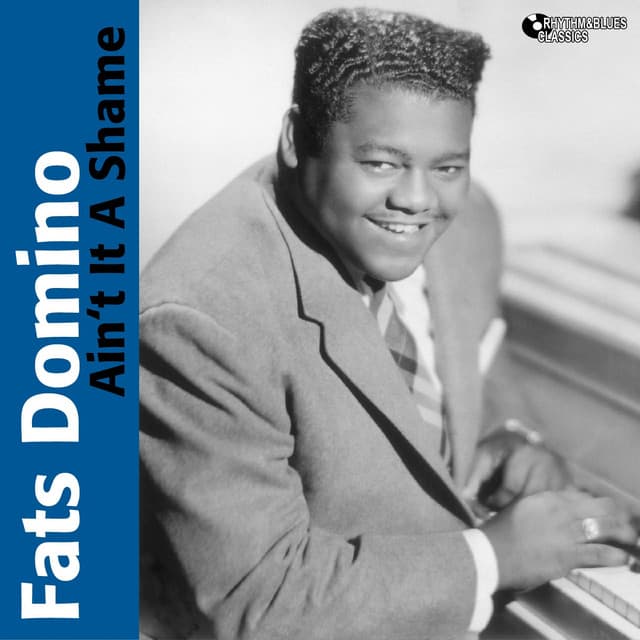
A Timeless Anthem of Resilience and the Gentle Ache of a Fading Heart: The Enduring Soul of Fats Domino’s “Ain’t That a Shame.”
There is a specific kind of magic that belongs exclusively to the mid-1950s a period when the world seemed to be shifting its rhythm, and a new sound was beginning to echo from the vibrant streets of New Orleans. At the heart of this revolution was a man whose smile was as wide as his piano technique was profound: Fats Domino. When we listen to his 1955 masterpiece, “Ain’t That a Shame,” we are not just hearing a foundational rock-and-roll record; we are revisiting the soundtrack of a generation’s awakening. Released on the Imperial label, the song became a staggering success, peaking at number 1 on the Billboard R&B chart and reaching number 10 on the Pop chart. It was a rare crossover hit that dismantled social barriers, proving that the language of a broken heart, when set to a rolling “New Orleans” beat, is entirely universal. For those of us who carry the memories of that era, this song is more than a melody; it is the scent of a summer evening, the vibration of a jukebox in a crowded diner, and the bittersweet realization that life’s disappointments can still be danced to.
The story behind “Ain’t That a Shame” is one of artistic synergy and cultural shift. Co-written by Fats Domino and his long-time collaborator and producer Dave Bartholomew, the song was originally titled “Ain’t It a Shame,” but the phrasing was altered to match the colloquial warmth of Fats’ delivery. There is a famous anecdote involving Pat Boone, whose cover version actually reached number one shortly after the original; however, it is Domino’s version that remains the definitive soul of the song. Even John Lennon, years later, would cite this specific track as the first song he ever learned to play, a testament to its foundational role in the history of modern music. When we hear that iconic opening the descending horn lines followed by Fats’ rhythmic, pounding piano triplets we are transported back to a time when the world felt both smaller and more full of possibility. It was a time of transition, much like the lyrics themselves, which describe the moment a lover realizes they’ve been left behind, standing in the wake of a “shameful” departure.
As we look back through the lens of experience, the meaning of “Ain’t That a Shame” deepens significantly. On the surface, it is a simple lament about a lost love, but for the sophisticated listener, it serves as a masterclass in emotional poise. Fats Domino does not wail or wallow in his sorrow; instead, he delivers the lines with a characteristic blend of sadness and “Crescent City” stoicism. The refrain “Ain’t that a shame / My tears fell like rain” is delivered with a rhythmic bounce that suggests a profound truth we only learn with age: that while pain is inevitable, our dignity remains in how we carry it. There is a gentle, rolling optimism in his piano playing that offsets the melancholy of the lyrics, creating a sanctuary for the listener where one can acknowledge regret without being consumed by it. For those who grew up in the shadow of this song, it represents the “Old World” charm of rhythm and blues a time when music had a physical weight and a heartbeat that you could feel in the floorboards.
The visual memory of Fats Domino seated at his piano, shimmering in a tuxedo, his fingers dancing across the keys with effortless precision remains one of the most comforting images in musical history. To revisit this track today is to honor a pioneer who brought a sense of joy and humanity to the airwaves during a turbulent time. It invites us to remember our own “first dances,” our own “shameful” heartbreaks, and the resilience we discovered in the aftermath. “Ain’t That a Shame” is a reminder that even when the tears fall, the music doesn’t have to stop. It is a piece of our collective history that refuses to dim, much like the spirit of New Orleans itself. For the discerning reader who appreciates the craftsmanship of a perfectly constructed song, this track remains a pinnacle of the era a soulful, rhythmic hug from an old friend that tells us that despite everything, the melody of life goes on.