
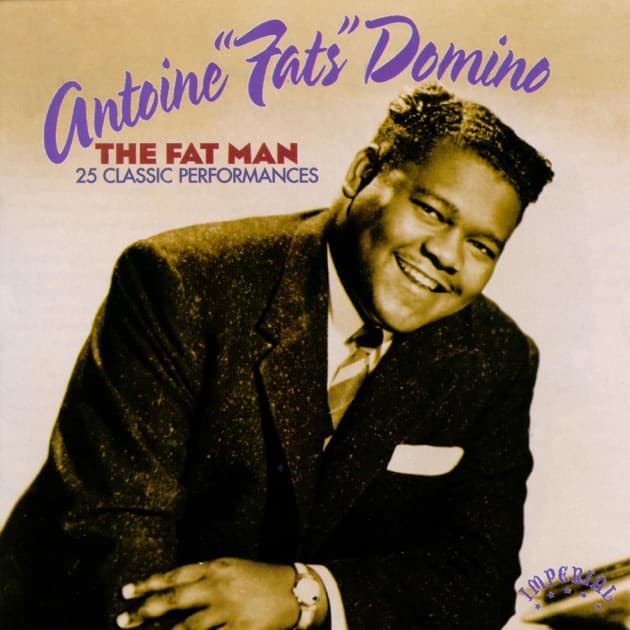
A joyful declaration of freedom and rhythm, carried on a New Orleans breeze that reached the whole world
When Fats Domino performed “Let the Four Winds Blow” on The Ed Sullivan Show on March 4, 1962, it was more than a television appearance it was a moment when the spirit of early rock ’n’ roll, rooted deeply in New Orleans rhythm and blues, stepped calmly and confidently into America’s living rooms. By then, musical tastes were beginning to shift, but Fats Domino stood as a reminder that joy, groove, and warmth never go out of style.
Originally released in 1961 on the album Let the Four Winds Blow, the song was written by Dave Bartholomew and Pearl King, two names inseparable from the sound of classic New Orleans R&B. Upon its release, “Let the Four Winds Blow” reached No. 21 on the Billboard Hot 100 and climbed to No. 2 on the R&B chart, marking one of Domino’s final major crossover hits in the rock ’n’ roll era he helped create. By the time he appeared on Ed Sullivan’s stage, the song already carried the weight of success but also the deeper weight of legacy.
The meaning of “Let the Four Winds Blow” is simple on the surface: let things happen, let love come or go, let life move as it will. Yet within that simplicity lies a philosophy that defined Fats Domino himself. There is no bitterness in the lyrics, no complaint, no drama. The narrator doesn’t chase or demand. He opens his hands and lets the world decide. It is a song about acceptance not resignation, but peace.
Musically, the track is built on a rolling piano groove that feels instantly familiar, like a trusted friend. Fats Domino’s piano does not shout; it smiles. His left hand anchors the rhythm while his right hand dances lightly, creating that unmistakable New Orleans sway. The horn accents, subtle but confident, lift the song without overpowering it. Everything moves together, unhurried, assured.
On The Ed Sullivan Show, this balance became even more apparent. Dressed simply, seated at the piano, Fats Domino did not perform with theatrical gestures or forced charisma. His presence was quiet, grounded, and deeply human. He sang with the same warmth audiences had loved since “Blueberry Hill”, his voice rounded by humility and joy. Watching him perform “Let the Four Winds Blow”, one could sense that this was not a man chasing relevance this was an artist fully at peace with who he was.
The cultural context of 1962 matters here. Rock ’n’ roll was evolving rapidly. New sounds were emerging, new faces rising. Yet Fats Domino represented continuity. He was one of the architects of the music itself, and his appearance on Ed Sullivan’s show served as a bridge between generations. It reminded viewers where this music came from from dance halls, neighborhood clubs, and the deep rhythmic traditions of New Orleans.
There is also something quietly profound about the song’s message when viewed through the lens of time. “Let the four winds blow” becomes a metaphor not only for love, but for life itself. Careers change. Trends fade. People come and go. What remains is the grace with which one accepts these movements. Fats Domino lived that philosophy both musically and personally, never abandoning his roots, never chasing excess.
Today, that 1962 performance endures not because it was flashy, but because it was sincere. It captures Fats Domino at a moment when he no longer needed to prove anything only to be himself. The song rolls on gently, like the Mississippi nearby, carrying with it laughter, memory, and the easy wisdom of a man who understood that sometimes the best thing you can do is simply let the music and the winds take their course.