
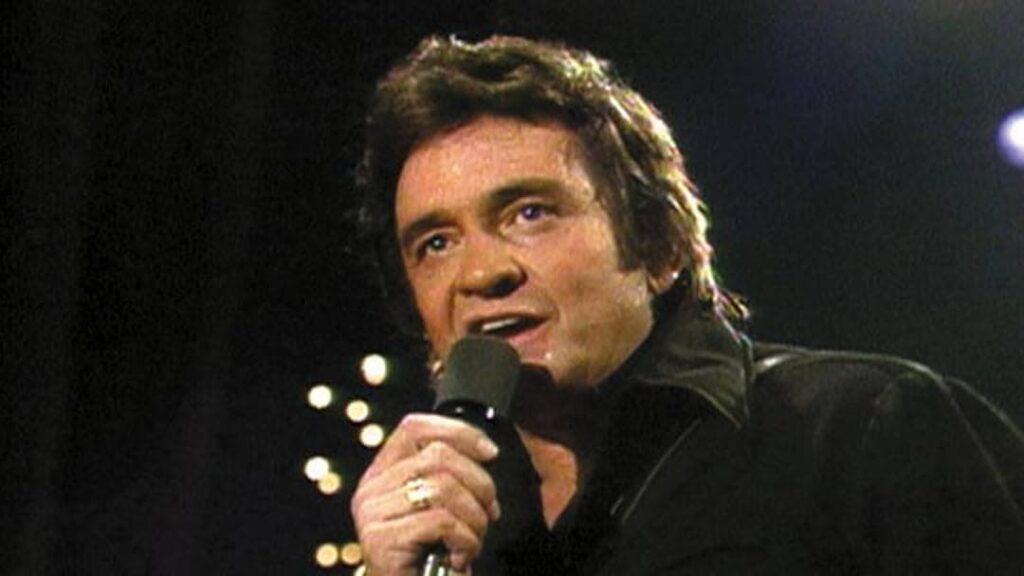
Johnny Cash’s Spring Special A Return to Roots, Camaraderie, and Musical Truth
In the spring of 1978, Johnny Cash didn’t just step onto a television stage he brought with him a lifetime of stories, friendships, and a reverence for American music that felt like a warm reunion around a campfire. The program widely known as Johnny Cash’s Spring Special actually recorded March 28, 1978 at the Grand Ole Opry House and aired on CBS in May 1978 was framed as a musical salute to spring, but it became something much deeper: a gathering of voices, generations, and traditions woven together through music.
This special was not a greatest-hits spectacle designed for flash; instead, it felt like looking through a window into Johnny Cash’s personal world the world he lived in when the lights were low and the music mattered most. His presence on screen was less about performance and more about communion: welcoming old friends, introducing younger talents, and sharing songs that spoke honestly to life’s changing seasons.
Cash’s choice of material and collaborators on the Spring Special reminded viewers that country music in the 1970s was not just an industry but a family. It featured performances not only by Cash himself but also appearances from iconic figures such as Waylon Jennings, George Jones, and others who, like Cash, had helped define the sound and spirit of modern country. These artists weren’t there to outshine one another; they were there to speak the same musical language a language shaped by hardship, love, loss, humor, and hope.
One remarkable element of the special was its atmosphere: raw, personal, and grounded. There were no extravagant set pieces or elaborate production gimmicks. Instead, the focus was squarely on the music and the bonds between the performers. In an era before polished reality TV and auto-tuned vocals, this 1978 program stood as a testament to honesty in music the kind of honesty Cash had championed since his early Sun Records recordings.
Cash’s own contributions during the special included performances that drew on both his catalogue and the deep well of Americana he loved. Whether he was delivering his signature baritone on one of his classics or trading verses with his peers, each moment carried a sense of lived experience that only comes from decades of travel, heartbreak, humor, and reflection. Behind him stood not just a band, but decades of cultural memory from gospel and folk to honky-tonk and outlaw country.
Beyond the performances, the Spring Special revealed Cash’s role not simply as a performer, but as a curator of tradition. He invited viewers to consider music not as background entertainment, but as storytelling a way to connect generations. In that sense, the show honored spring not as a season of flowers, but as a metaphor for renewal: of friendships, of music passed hand to hand, and of cultural heritage that persists even when the world around us changes.
For older audiences and longtime fans, this special remains a treasured snapshot of Johnny Cash at a moment when his influence was unmistakable but unpretentious. It speaks with warmth and humility, a reminder that the most enduring music doesn’t chase trends it honors truths. In the end, the 1978 Spring Special wasn’t just another TV program; it was an affirmation of why Cash’s voice still resonates: because he reminded us that life’s stories like the seasons always circle back to the things that matter most.
 Oldies Songs