
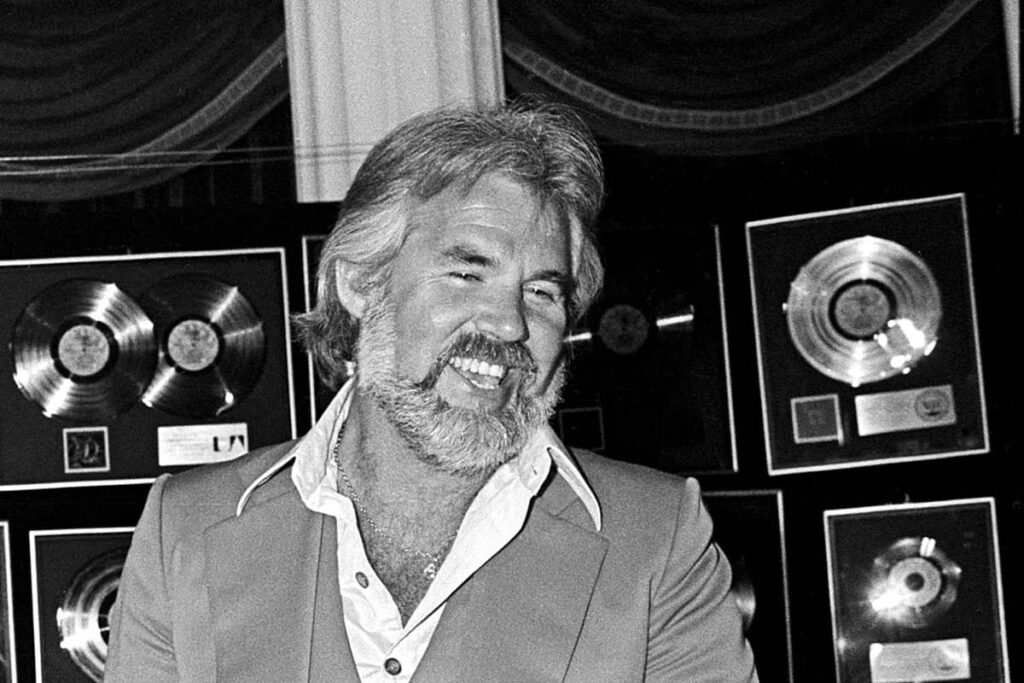
A Late-Life Confession: Love, Regret, and Grace in “Buy Me a Rose”
“Buy Me a Rose” stands as one of the most quietly powerful recordings in Kenny Rogers’ long and storied career a song that arrived late in his life, yet spoke with the wisdom of decades. Released in 1999 as part of the album She Rides Wild Horses, the song did something rare in popular music: it reminded listeners that love, when neglected, does not disappear it waits, patiently, to be acknowledged.
Upon its rise in popularity, “Buy Me a Rose” achieved a historic milestone. In 2000, the song reached No. 1 on the Billboard Hot Country Singles & Tracks chart, making Kenny Rogers, at age 61, the oldest artist at the time to top that chart. The achievement was more than numerical. It was symbolic a testament to the enduring power of emotional truth over trends, youth, or production polish.
Written by Jim Funk and Erik Hickenlooper, the song tells a simple but devastating story. A husband realizes too late that love is not sustained by grand gestures remembered only in youth, but by everyday tenderness. The request at the heart of the song is modest: buy me a rose, call me from time to time, tell me you love me. Yet within that modesty lies a lifetime of unmet needs and quiet disappointment.
Musically, “Buy Me a Rose” is restrained and deliberate. Soft acoustic guitar, gentle piano, and subtle orchestration create a reflective atmosphere. There is no dramatic build, no chorus designed to overwhelm. The song unfolds like a conversation held late at night, when defenses are down and honesty finally feels safe. The production wisely stays out of the way, allowing the narrative to breathe.
Kenny Rogers’ vocal performance is the emotional anchor. His voice, weathered and calm, carries the weight of experience. He does not sing as a narrator passing judgment, but as a witness someone who understands how easily love can be taken for granted. There is compassion in his delivery, not condemnation. Even as the song reveals regret, it leaves room for redemption.
What makes “Buy Me a Rose” especially powerful is its emotional perspective. The song does not center on betrayal, dramatic separation, or explosive conflict. Instead, it focuses on emotional neglect, one of the most common and least discussed forms of heartbreak. The pain here is quiet, accumulated over years of small omissions. And that quietness makes it all the more real.
The final verses offer a subtle shift from regret toward awareness. There is an unspoken understanding that while time cannot be reversed, intention can still change. The song does not promise a perfect ending. It offers something more honest: the possibility that love, once recognized, can still be honored.
Within Kenny Rogers’ broader catalog filled with iconic story songs like “The Gambler”, “Lucille”, and “She Believes in Me” “Buy Me a Rose” holds a unique place. It is less about narrative drama and more about emotional reckoning. It reflects an artist willing to confront vulnerability not with spectacle, but with sincerity.
Today, “Buy Me a Rose” continues to resonate deeply because its message does not age. It speaks to anyone who has ever assumed love would wait, who believed that providing was the same as caring, or who learned perhaps too late that affection must be expressed, not implied.
In its gentle melody and honest words, “Buy Me a Rose” stands as a quiet reminder: love is sustained not by memory, but by attention. And sometimes, the most meaningful gesture is the simplest one offered not yesterday or tomorrow, but now.