
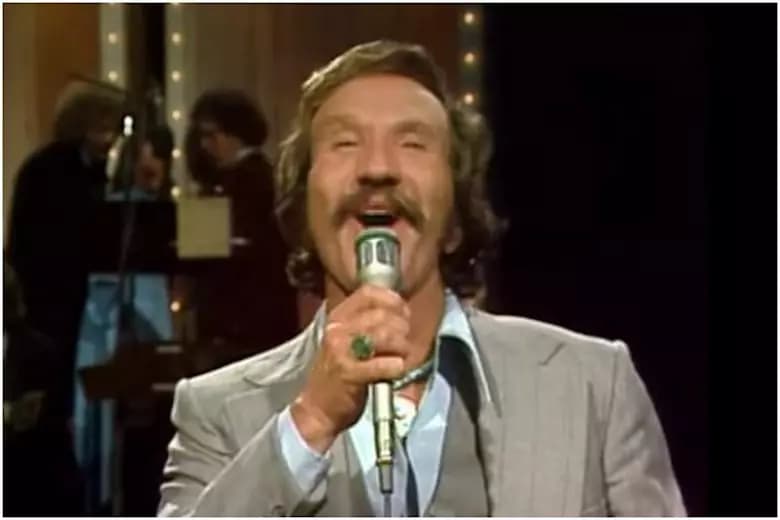
A homesick heart calling back to a place time can’t erase
When you listen to “Little Green Valley” by Marty Robbins, something soft and familiar rises within you a gentle longing that feels older than the years themselves. Though it was never released as a standalone single, the song found its home on the legendary 1959 album Gunfighter Ballads and Trail Songs, a record that climbed to #6 on the U.S. Pop Albums chart and became one of the most enduring western albums in American music history. Nestled among dramatic tales of cowboys, gunfighters, and lonely deserts, “Little Green Valley” shines like a quiet memory tucked away in the corner of a well-worn heart. Written by Carson Robison, the song draws from an earlier era of American songwriting one where melodies were simple, lyrics were painted with soft brushstrokes, and every word felt like a return to somewhere safe. Marty Robbins recorded the entire album in a single day, April 7, 1959, and in the midst of all the grand storytelling, “Little Green Valley” was captured with a gentleness that almost feels accidental. Robbins’s voice warm, pure, and without a trace of strain carries the song’s longing with effortless grace. It is not the voice of a hero or a legend, but of a man remembering a place he loved and perhaps left too soon.
From the opening lines, the song pulls you into its world. You can almost see the home he describes: a small house tucked beyond rolling hills, vines curling around the doorframe, a candle glowing softly in the evening shade. The imagery is so vivid that it feels less like listening, and more like stepping into a memory of your own. Even if your childhood wasn’t spent in a valley, even if the landscapes of your youth were different, the emotion is universal the ache of longing for a place where life once felt simple and the world seemed wide and welcoming. And that is the quiet power of the song. It doesn’t demand your attention; it doesn’t rise in dramatic peaks; it simply walks beside you, reminding you of how deeply a home can shape a life.
In the late 1950s, as people were leaving small towns for big cities, as daily life grew louder and faster, “Little Green Valley” offered listeners a pause a breath a way to step back into a gentler time. Marty Robbins himself was celebrated for his vivid western epics, but this song reveals another side of him: the tender storyteller, the man who understood that the greatest journeys sometimes lead us back to where we began. There is no heroism here, no triumphant return just hope. Hope that the valley still waits. Hope that memories haven’t faded. Hope that the heart, no matter how far it travels, still knows the path home.
Hearing the song today feels like opening a forgotten drawer and finding an old photograph: a little worn at the edges, maybe yellowed by years, but still carrying all the warmth of the moment it was taken. It reminds us that time may move forward, but the places we carry inside us remain untouched. Whether your own “little green valley” was a childhood home, a distant hometown, or simply a period of life that glows brighter in memory, the song invites you to revisit it gently, lovingly, without regret. And perhaps that is why the song continues to speak across generations. It isn’t just about a valley. It is about the longing embedded in all of us, the desire to return to the simplest version of ourselves. In its quiet way, “Little Green Valley” becomes more than a song; it becomes a reminder that somewhere deep inside, we all keep a small green place the world can never take away.
 Oldies Songs