
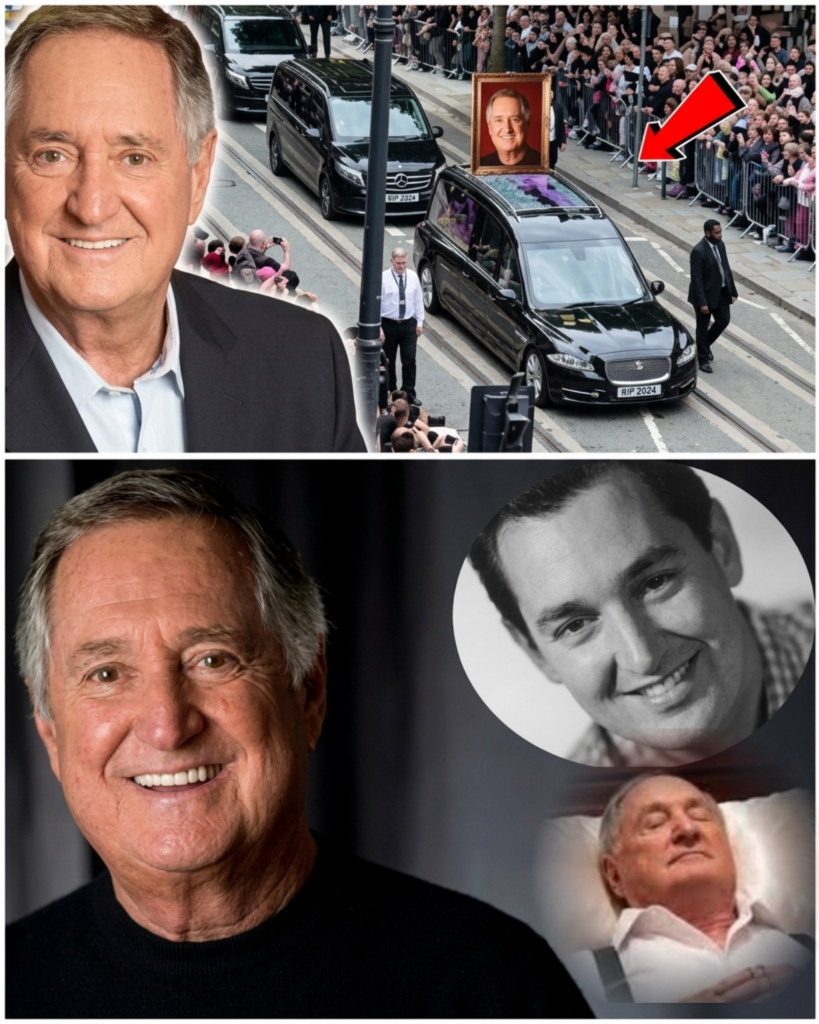
The Final, Bittersweet Cadence of a Master Melodist: Remembering Neil Sedaka and the Immortality of a Life Sculpted in Song
The passing of the legendary singer, songwriter, and classically trained pianist Neil Sedaka on February 27, 2026, marked the quiet closing of one of the most prolific chapters in the history of American popular music. When news broke from Los Angeles that the beloved Brooklyn native had left us at the age of 86, a profound wave of reflective sorrow and deep nostalgia swept across multiple generations of listeners who had essentially soundtracked their youth, their heartbreaks, and their greatest joys to his brilliant melodies. While the global musical community continues to process this deeply emotional goodbye, the true memorial service for Sedaka does not merely exist within a single chapel or auditorium. Instead, his lasting farewell is found inside the timeless, pristine grooves of over 500 compositions that he leaves behind—a towering monument to melodic sincerity, flawless craftsmanship, and an unyielding commitment to the traditional art of songwriting that survived every major shift in cultural fashion.
To truly measure the depth of Neil Sedaka’s historic legacy, one must look at the unprecedented, record-breaking chart achievements that defined his brilliant career. His signature masterpiece, “Breaking Up Is Hard to Do,” achieved an extraordinary, singular milestone in the history of the Billboard Hot 100 chart. When first released as a bright, uptempo doo-wop anthem in 1962, the track catapulted all the way to No. 1, defining the vibrant, youthful energy of the early sixties. Remarkably, more than a decade later in 1975, Sedaka completely reimagined the exact same song for his critically acclaimed album The Hungry Years, slowing the tempo down into a sophisticated, jazz-inflected, and heartbreakingly slow torch ballad. This mature reinterpretation defied all industry expectations by climbing to No. 8 on the Hot 100 and topping the Adult Contemporary chart, making him the only artist in popular music history to score a Top 10 Billboard hit with two entirely different versions of the same track.
The fascinating backstory behind his decades of success reveals a narrative of immense resilience, creative rebirth, and pure artistic courage. Raised in the Brighton Beach neighborhood of Brooklyn, Sedaka was a prodigy who earned a prestigious scholarship to the Preparatory Division of the Juilliard School of Music when he was just a child. While his formal training was rooted in classical piano, his soul was captured by the emerging sounds of early rock ‘n’ roll, leading to his historic partnership with lyricist Howard Greenfield at the famous Brill Building. Together, they penned an endless string of hits not just for Neil—such as “Oh! Carol” and “Calendar Girl”—but also for icons like Connie Francis, who took their song “Stupid Cupid” to the top of the charts in 1958. When the British Invasion temporarily pushed his traditional pop style off American airwaves in the mid-1960s, Sedaka refused to fade away; instead, he relocated to the United Kingdom, caught the attention of a young Sir Elton John, and engineered a triumphant 1970s American comeback on Rocket Records with global chart-toppers like “Laughter in the Rain” and “Bad Blood.”
When one pauses to listen deeply to his catalog today in the wake of his passing, the underlying meaning of his music reveals itself as an elegant study of the human heart. Sedaka possessed a rare, innate ability to wrap complex, classical chord progressions in accessible, comforting pop structures, creating a sense of immediate intimacy between the speaker and the listener. Songs like “The Hungry Years” served as deeply moving, poetic reflections on lost innocence and the heavy price of chasing success, capturing a bittersweet sense of longing that grows increasingly poignant as time marches forward. His songs never relied on passing studio trends or heavy electronic cosmetics; they were anchored entirely by the natural resonance of a beautifully struck grand piano and a crystalline, pure vocal delivery that remained completely intact well into his final years of live performance.
Saying a final, emotional goodbye to this legendary pioneer brings a quiet, pensive solitude—a realization that the grand architects of twentieth-century popular song are gradually stepping away from the stage. Yet, re-engaging with Neil Sedaka’s pristine studio tracking and rare archival broadcast moments offers a powerful source of comfort and profound gratitude. He was a consummate gentleman of the old guard who viewed music as a sacred bridge between souls, a craftsman who spent sixty years transforming private emotions into universal anthems. Though the physical spotlights have dimmed and the piano lid has been gently closed for the last time, the beautiful melodies he delivered straight from his passionate, resilient soul possess an immortal strength. His music will continue to echo across the decades, warm our hearts, and remind us that a true masterpiece never fades away.