
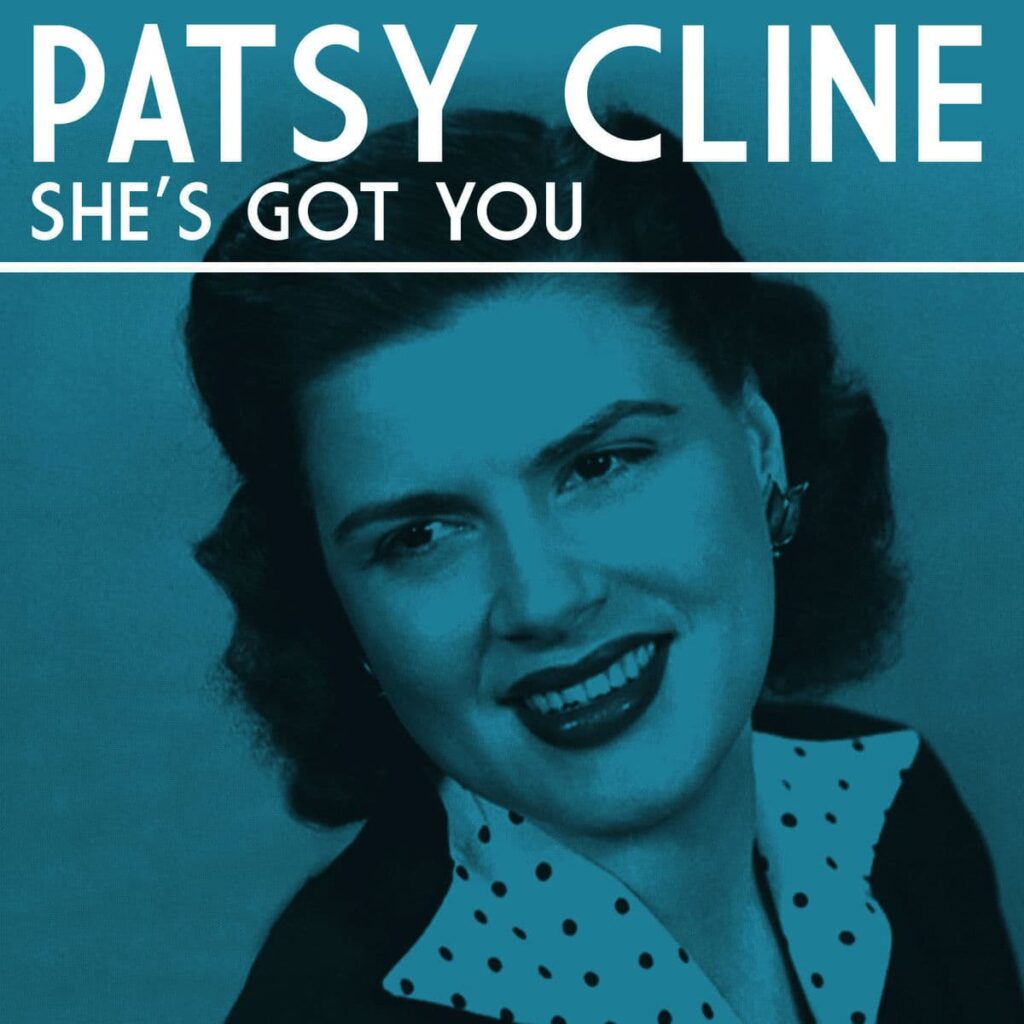
A tender lament for what remains She’s Got You evokes the pain of memory and the ache of loss
Patsy Cline’s “She’s Got You” is an elegant, heart-aching declaration of bittersweet sorrow a woman surrounded by reminders of a past love, yet painfully aware that he now belongs to someone else.
When She’s Got You was released on January 10, 1962, it rose swiftly to become one of Cline’s signature songs. It reached No. 1 on Billboard’s Hot C&W Sides chart, marking a triumphant return to the top for her. On the more general Billboard Hot 100, it peaked at No. 14, showing its crossover appeal beyond country audiences. It also climbed to No. 3 on the Easy Listening chart, underlining its graceful, pop-sensitive arrangement. Overseas, in the UK, it reached No. 43 on the singles chart. The song later appeared on her third studio album, Sentimentally Yours, released in August 1962.
The story behind She’s Got You is as poignant as its melody. The song was written by Hank Cochran, who believed deeply in its potential. According to biography accounts, he called Patsy late one afternoon, declared that he’d composed what he thought would be her next No. 1 hit, and played it for her along with a bottle of liquor in her home while their friend Dottie West listened in. Patsy was moved to tears by the lyrics; she learned the song that very evening and phoned her producer and manager to sing it over the line. Her emotional connection to the song, combined with her producer Owen Bradley’s faith, made the recording session one of rare harmony they both felt they had something truly special.
Lyrically, She’s Got You is a deeply sorrowful meditation on the small, precious remnants left behind when love has shifted. Patsy sings of photographs, records, and even a class ring tangible tokens of a once-shared life. Yet despite these keepsakes, she confesses that while she “has got the little things … she’s got you.” That line hits like a quiet blow: the things she treasures are only hollow echoes of what she truly lost. The emotional center of the song hinges on the line, “I’ve got your memory … or has it got me?” a delicate, heartbreaking question that lingers in the listener’s heart.
Musically, the song is a graceful blend of country warmth and pop polish sometimes called countrypolitan. Patsy’s voice is rich and nuanced, carrying a mixture of longing, regret, and acceptance. The arrangement, under Bradley’s production, is elegant and restrained: soft piano, gentle backing vocals, and touches of steel guitar that underline the emotional weight without overwhelming her delicate delivery.
The deeper meaning of She’s Got You lies in its meditation on absence and presence, on what remains when love moves on. It’s not just about losing someone it’s about living with the reminders: photos that still carry his signature, records that still play like they once did, a piece of jewelry that proves he once cared. These objects become a bittersweet consolation but they also remind her constantly of what she no longer holds.
Over time, the song’s legacy has grown. It has been covered by many artists including Loretta Lynn, whose version also reached No. 1 on the country chart in 1977 on her tribute album I Remember Patsy. The song remains one of Cline’s most beloved and enduring recordings, often regarded as a highlight not only of her voice but of her emotional honesty.
For listeners today, especially those who carry their own memories of love and loss, She’s Got You resonates deeply. When Patsy sings, you can feel the ache of her solitude and the bittersweet comfort she finds in the things she has left. It is a song of reflection, of mourning, and of quiet strength a reminder that love, once felt, never quite leaves us, even when it walks into someone else’s arms.
 Oldies Songs