
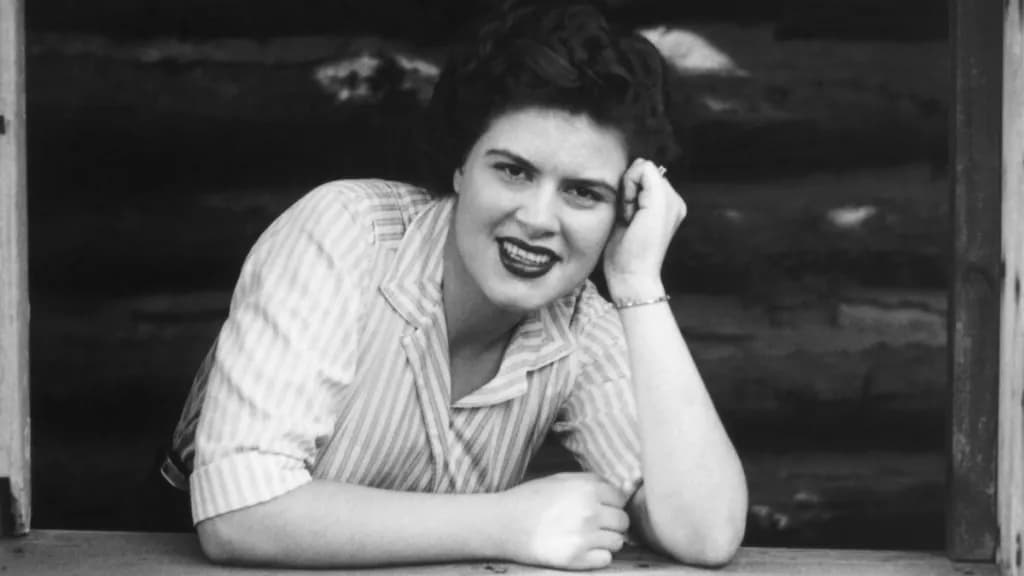
A quietly unsettled reflection on love lost and the bewildering changes it brings “Strange” by Patsy Cline
“Strange” is a haunting lament of romantic disillusionment, where Patsy Cline sings with gentle sorrow about how love can transform beyond recognition leaving behind pain, regret, and bewilderment.
Released in 1962, “Strange” did not shine as a stand-alone chart-topping hit but carried deep emotional weight as the B-side to “She’s Got You”. The song appears on her Sentimentally Yours album, released in August of that year. According to her discography, it charted modestly, reaching #97 on the U.S. Country chart.
“Strange” was written by Mel Tillis and Fred Burch, two songwriters who understood how love’s subtler cruelties can wound as deeply as its more dramatic betrayals. The song opens with Cline’s voice asking, “Strange how you stopped loving me, how you stopped needing me when she came along,” immediately revealing a narrator who is stunned by the sudden change in her partner.
As the verses unfold, the “strange” motif repeats in different forms her lover’s behavior changed “like night and day,” and she calls herself a “puppet … you held on a string.” These lyrics speak to a power imbalance in the relationship, a realization that she was manipulated and held in emotional dependency. The pain intensifies as she admits, “To think I thought you really loved me, but look what thoughts can bring,” acknowledging how love’s illusions deceived her.
The final verses ease into a bittersweet reverie: “Strange, you’re still in all my dreams … I still care for you, oh, how strange.” Despite being hurt, her emotions persist love and memory entwined, refusing to be dismissed by reason alone. According to lyric analysts, this lingering attachment reflects a universal truth: when love changes, it doesn’t always leave quietly.
Musically, the arrangement of “Strange” is understated but effective. Owen Bradley, her longtime producer, framed the song with a gentle touch subtle rhythms, soft strings, and Patsy’s warm, emotive voice taking central focus. Her performance feels intimate and raw; there’s vulnerability in every note, as though she sings not just for us, but for her own heart.
What makes “Strange” particularly resonant for older listeners is how it captures the shock of change in a relationship the moment where familiar love becomes unfamiliar, and the person you once knew seems almost a stranger. For an audience that may have lived through long marriages, lost loves, or quiet separations, Cline’s voice in this song feels especially personal. Her ability to convey complex emotion with such clarity and simplicity reminds us of the power of a song to voice what many feel but cannot say.
Though “Strange” did not explode into a major hit, it remains a gem in Patsy Cline’s catalog a quietly powerful testament to her artistry. Her emotional honesty, combined with the song’s evocative lyrics, ensures that it still resonates decades later. Its message is timeless: love, change, and loss are often “strange” in more ways than we imagine.
In the end, Patsy Cline’s “Strange” offers a thoughtful meditation on the unpredictability of the heart. It’s a song to sit with when memories stir, when loss feels inexplicably strange, and when we realize that sometimes, the deepest hurt comes not from what was done, but from how deeply we believed what we thought we knew.
 Oldies Songs