
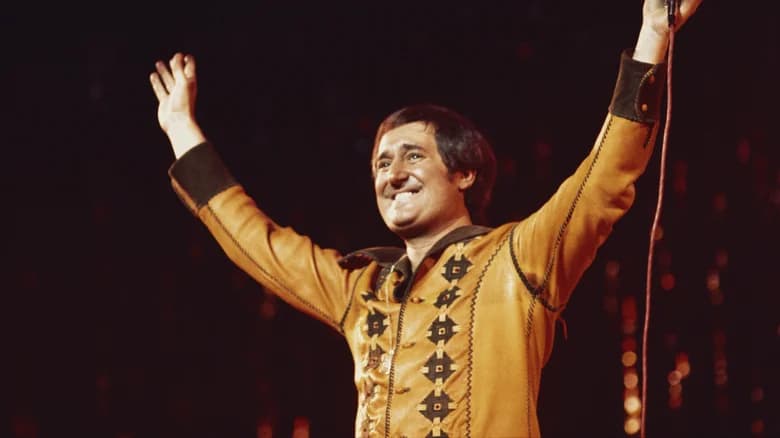
The history of pop music is littered with “one-hit wonders” and stars who burned bright for a season before fading into the nostalgic haze of oldies radio. Rare is the artist who can withstand the seismic shifts of musical trends, and rarer still is the songwriter who can take a chart-topping hit from one decade and transform it into a completely different masterpiece for another.
With the passing of Neil Sedaka at age 86 in February 2026, the world lost more than just a singer; we lost a master architect of the American songbook. Perhaps nothing illustrates his genius better than the dual legacy of “Breaking Up Is Hard To Do”—a song that hit the Top 10 twice, fourteen years apart, in two versions that are both considered “stone-cold classics.”
The Brill Building Era: A Doo-Wop Phenomenon
To understand the first life of “Breaking Up Is Hard To Do,” one must go back to the early 1960s. Neil Sedaka, a classically trained piano prodigy from Brooklyn, had already established himself as a formidable force within the legendary Brill Building in Manhattan. Alongside his lifelong songwriting partner Howard Greenfield, Sedaka was part of a stable of writers (including Carole King and Burt Bacharach) who defined the sound of a generation.
Released in the summer of 1962, the original version of “Breaking Up Is Hard To Do” became Sedaka’s first Billboard Hot 100 No. 1. It was the quintessential post-Elvis, pre-Beatles pop anthem. From its iconic, scat-singing opening—“Do-do-do, down dooby-doo-down-down”—the track was a masterclass in jaunty, high-energy doo-wop.
At the time, the song captured the innocent, albeit dramatic, heartbreak of the “sock-hop” crowd. With its snapping fingers, shimmering harmonies, and upbeat tempo, the music almost disguised the sadness of the lyrics. It was bubblegum pop perfection, designed for transistor radios and teenage bedrooms. In 1962, Neil Sedaka wasn’t just a singer; he was the voice of American youth.
The Wilderness Years and the British Invasion
However, the “forever” of pop stardom is often shorter than it seems. On February 7, 1964, the Beatles landed at JFK Airport, and almost overnight, the landscape of American music changed. The polished, Brill Building sound was suddenly deemed “uncool” by a generation hungry for the raw energy of the British Invasion and, later, the psychedelic experimentation of the late ’60s.
For a decade, Neil Sedaka found himself on the sidelines of his own industry. While he continued to write hits for others—like the Monkees or Connie Francis—his solo career in the U.S. seemed to have reached its final chapter. He moved to the UK, where audiences remained more loyal to his brand of melodic craftsmanship. It was during this “exile” that Sedaka began to mature, not just as a man, but as an artist.
1975: The Suave Reinvention
The second life of “Breaking Up Is Hard To Do” began with a chance encounter and a profound musical realization. By the mid-70s, Neil Sedaka had signed with Elton John’s Rocket Records. Elton, a massive fan of Sedaka’s melodic sensibility, helped facilitate one of the greatest “second acts” in music history.
In late 1975, Sedaka decided to revisit his 1962 signature hit, but with a radical twist. He stripped away the handclaps, the backing “doo-wop” choir, and the frantic tempo. What remained was a slow, piano-driven torch song.
If the 1962 version was the sound of a teenager crying in a diner, the 1975 version was the sound of a man reflecting on a lifetime of love and loss in a smoky cocktail lounge. The jaunty “down dooby-doo” scatting was transformed into a haunting, soulful croon. The lyrics—“I beg of you, don’t say goodbye / Can’t we give our love another try?”—took on a desperate, sophisticated weight that the original never possessed.
This “slow version” peaked at No. 8 on the Billboard charts in early 1976. Sedaka had pulled off the impossible: he became the first artist in history to reach the Top 10 with two entirely different arrangements of the same song. He proved that a great melody is timeless; it only needs the right garment for the era.
The Craft of Longevity
What the Grunge retrospective and the recent tributes to Sedaka highlight is his refusal to be a relic. Sedaka’s longevity was rooted in his classical training. Having studied at Juilliard, he understood the “bones” of a song—the harmony, the counterpoint, and the structure. This foundation allowed him to reinvent himself when the world around him changed.
In his final years, Sedaka’s dedication to his craft remained undiminished. During the 2020 pandemic, he found a new audience on social media, performing free “mini-concerts” from his piano at home. He wasn’t doing it for the money; he was doing it for the connection. He understood that music is a service—a way to bridge the gap between people.
As he recently reflected before his passing: “I think the reason I’ve been around so long is I’ve always been able to raise the bar, reinvent Neil Sedaka, and to develop and grow.”
A Legacy in Two Tempos
As we look back on the life of Neil Sedaka (March 13, 1939 – February 27, 2026), we are reminded that music is a conversation that never truly ends.
Whether you prefer the shimmering, innocent joy of his 1962 doo-wop classic or the suave, melancholic depths of his 1975 reinvention, you are listening to the heart of a man who loved the piano more than almost anything else. Neil Sedaka didn’t just write songs; he wrote the soundtrack to the American experience, proving that while breaking up is indeed hard to do, staying relevant for seven decades is even harder—and he did it with a smile and a perfect melody.
Today, as the “laughter in the rain” fades into a quiet memory, we invite you to sit back, close your eyes, and listen to the man from Brooklyn one more time. The stage may be empty, but the music remains—stone-cold classic, and forever beautiful.
 Timeless Melodies