
A poignant reflection on the fleeting nature of fame and the hollow glitter of the West Coast, captured through the seasoned lens of a songwriting legend.
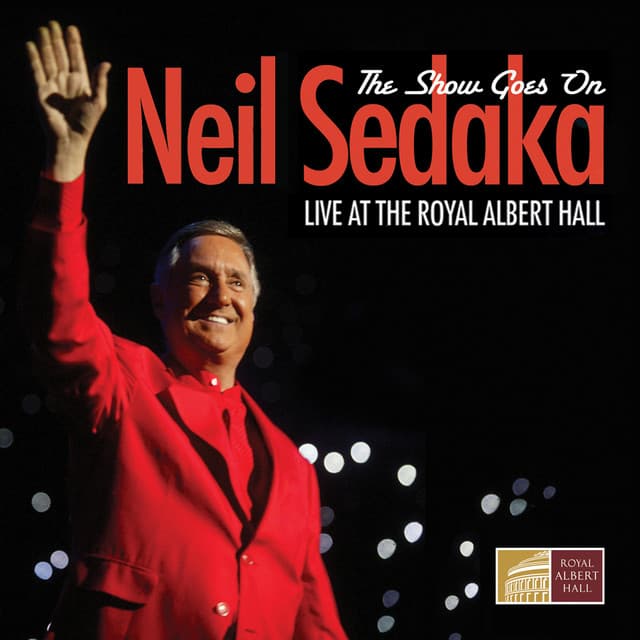
The magic of a live performance often lies in the bridge it builds between the artist’s present wisdom and their past ambitions. When Neil Sedaka took the stage at the prestigious Royal Albert Hall, he wasn’t just a pop idol; he was a master craftsman revisiting a chapter of his life that felt both distant and intimately familiar. Among the catalog of upbeat chart-toppers, “Cardboard California” stands out as a sophisticated, introspective masterpiece. While many associate the “California sound” with sun-drenched optimism, Sedaka, alongside his brilliant lyrical collaborator Howard Greenfield, opted for a more cynical, cinematic gaze. This song, particularly the rendition from the Live At The Royal Albert Hall recording, serves as a haunting reminder that the “Golden State” often offered nothing more than a two-dimensional facade to those seeking a soul in the spotlight.
Technically, “Cardboard California” emerged during Sedaka’s “British period”—a pivotal era in the early 1970s when his career found a second wind in the UK while the American charts remained temporarily cool. It featured on his 1972 album Emergence, a record that signaled his transition from a teen-pop sensation to a serious singer-songwriter. While the studio version is lush, the live performance at the Royal Albert Hall strips away the artifice, leaving us with the raw resonance of the piano and a voice that has seen the highs and lows of the industry. It reflects the maturity of an artist who had survived the British Invasion and was now looking back at the industry towns that made and broke dreams.
The story behind the song is one of disillusioned observation. In the late 60s and early 70s, the music industry’s epicenter had shifted heavily toward Los Angeles. For a New Yorker like Neil Sedaka, the transition revealed a landscape that felt staged—like a movie set where the palm trees were bolted down and the smiles were practiced in the mirror. The lyrics paint a picture of “celluloid people” and “painted skies,” capturing the profound loneliness that exists in a place where everyone is performing. It is an anthem for the weary traveler who realizes that the “American Dream” packaged in Hollywood is often made of nothing sturdier than cardboard. For an audience that has lived through the decades, these lyrics hit home; they speak to the universal experience of realizing that the things we once chased with youthful fervor were often just shadows on a wall.
Meaningfully, the song explores the cost of vanity and the transience of success. As Sedaka sings about the “paper-mâché mountains,” he is really talking about the fragility of human ego. The Royal Albert Hall performance is particularly moving because of the setting—a temple of high art in London, thousands of miles away from the “plastic” world he is describing. There is a palpable sense of irony and bittersweet nostalgia in his delivery. He isn’t just singing a song; he is sharing a cautionary tale with an audience that has likely seen their own share of “cardboard” promises. It is a sophisticated piece of social commentary wrapped in a beautiful, melancholic melody, reminding us that true substance is found not in the scenery of our lives, but in the authenticity of our journeys. Listening to it now, one cannot help but feel a deep, quiet yearning for a time when music dared to be this honest, this poetic, and this profoundly human.