
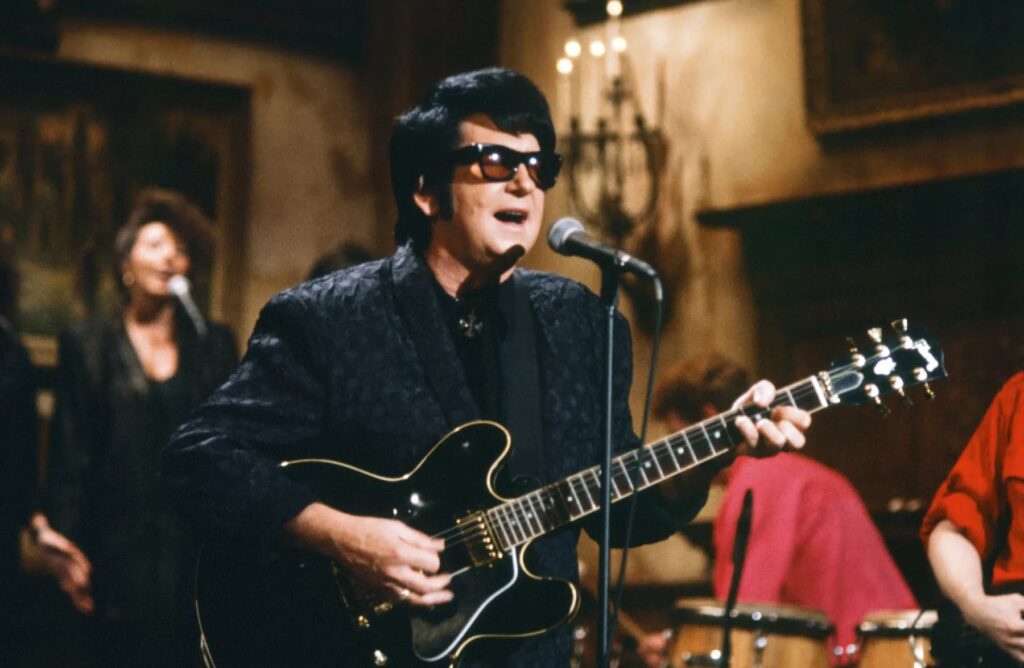
A wistful longing for love and home carried across the waves of memory
“Blue Bayou” by Roy Orbison is a song steeped in longing and tender melancholy, capturing the universal ache for home, love, and lost serenity. Released in 1963 as part of Orbison’s “In Dreams” album, the song showcased his remarkable ability to convey deep emotion through his signature soaring vocals. Though it did not reach the very top of the charts at its initial release, peaking at #29 on the Billboard Hot 100, its resonance grew over time, cementing its place as one of Orbison’s most cherished and enduring works.
The heart of “Blue Bayou” lies in its simplicity and emotional honesty. Orbison sings of yearning to return to the tranquil, beloved bayou of his dreams, where love and peace once existed. The lyrics evoke imagery of rivers, moonlight, and quiet nights, conjuring a world that feels both distant and intimately familiar. His voice, with its luminous clarity and emotional depth, transforms the song from a simple narrative into a heartfelt confession. It speaks of the universal human desire for comfort and belonging, of nostalgia for times and places that may no longer exist.
The story behind “Blue Bayou” adds another layer of poignancy. Written by Roy Orbison and Joe Melson, the song was inspired by Orbison’s fascination with the South and the evocative imagery of waterways and solitude. It embodies his genius for translating personal longing into a form that touches anyone who has felt the ache of distance from love or home. The song’s emotional power lies in its delicate balance between sorrow and hope, longing and gentle beauty, qualities that made Orbison’s music so unique and timeless.
Musically, “Blue Bayou” is understated yet profoundly moving. The arrangement is elegant, with soft guitar lines, subtle percussion, and gentle orchestral touches that highlight Orbison’s vocal performance without overshadowing it. This restrained instrumentation allows the listener to focus on the nuances of his voice the way it rises, the controlled vibrato, and the almost ethereal quality that conveys both fragility and strength. It is a performance that demonstrates Orbison’s exceptional artistry, revealing the emotional depth that would influence countless singers in the decades to follow.
For those who treasure music that evokes memory and reflection, “Blue Bayou” is a masterpiece of subtle storytelling. It captures a longing for a lost haven, a place of emotional sanctuary, and a love that remains just beyond reach. The song is not just about geography or romance; it is about the ache of memory itself, about the ways in which we carry our deepest desires and regrets within us. It invites listeners to drift in the current of their own recollections, to remember the quiet, irreplaceable moments of life that define who we are.
In the broader context of Roy Orbison’s career, “Blue Bayou” exemplifies his ability to meld technical mastery with profound emotional expression. It illustrates why he is often hailed as one of the most expressive voices of his era. While not initially a chart-topping single, its legacy endures, proving that true artistry transcends immediate commercial success. The song later gained even greater recognition through covers by artists like Linda Ronstadt, further testifying to its universal appeal and timeless quality.
Ultimately, “Blue Bayou” is a song that speaks to the heart and lingers in memory. It is a gentle, wistful reminder that the places and moments we hold dear continue to shape us, long after they are gone. With Roy Orbison’s evocative performance, it remains an enduring anthem of longing, reflection, and the quiet, ineffable beauty of cherished memories.