
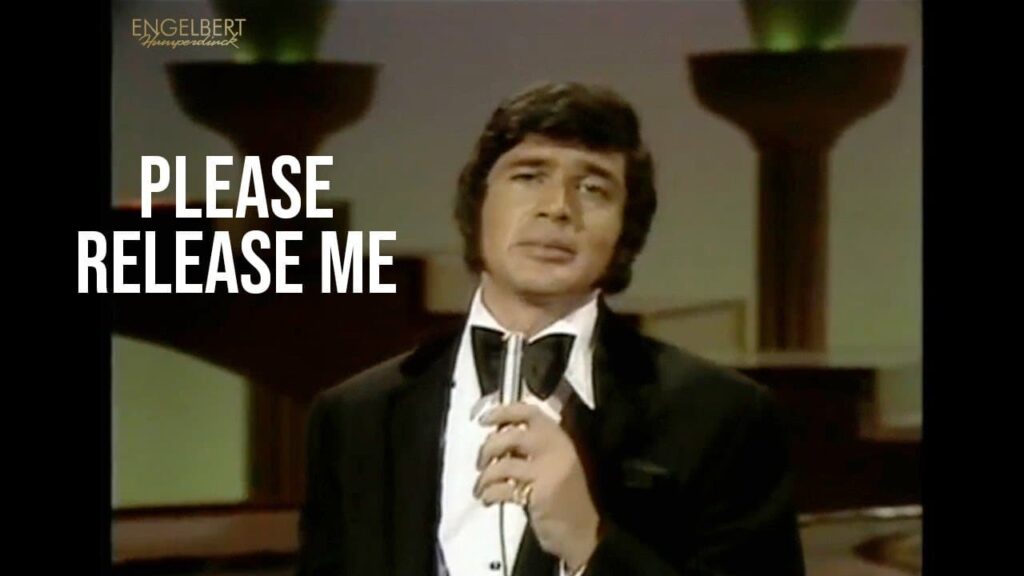
The Glorious Defiance of a Traditional Ballad: When Engelbert Humperdinck’s Masterpiece Halted the Avant-Garde Juggernaut of The Beatles and Captured History Live
When Release Me ascended to the highest echelon of the British music charts in early 1967, it achieved a feat so statistically staggering that it permanently re-engineered the historical narrative of twentieth-century popular culture. Released as a seismic standalone single under the Decca Records label before anchoring his definitive 1967 debut album Release Me, the track accomplished what was previously thought impossible: it captured the No. 1 spot on the UK Singles Chart and fiercely held that territory for six consecutive weeks. In doing so, this sweeping ballad became universally famous for creating the most unexpected upset in British pop history—effectively blocking The Beatles’ double A-side masterpiece “Penny Lane” / “Strawberry Fields Forever” from reaching the summit, breaking their consecutive string of eleven number-one hits. Across the Atlantic, the song mirrored this monumental triumph, soaring to No. 4 on the Billboard Hot 100 and spending over a year on the American charts, transforming Engelbert Humperdinck (born Arnold George Dorsey) into a global crossover phenomenon overnight.
The extraordinary longevity of “Release Me”—a song originally penned in 1946 by Eddie Miller and Robert Yount—owes its immortal stature to the meticulous architecture of Engelbert’s definitive interpretation, which reached its absolute zenith during his legendary Live Performance tours. When he steps center stage under the warm, dazzling concert spotlights to resurrect this historic anthem, he isn’t merely singing a classic track; he is actively recreating the exact three minutes of sonic magic that fundamentally rewrote the destiny of his life. The live arrangement begins with an air of quiet, sacred reverence, immediately showcasing the unforced, majestic poise and exceptional breath control that defined the golden era of big-band pop showmanship. Guided by a lush, late-night string section and the delicate, weeping sighs of a steel guitar, Engelbert approaches the microphone with a striking balance of mature wisdom and controlled vulnerability, ensuring that the heavy, sighing weight of the opening lyrics hooks the soul instantly.
What makes exploring these live archival documents so intensely spellbinding for the sophisticated music connoisseur is the sheer, unparalleled ease with which this premier country-pop balladeer commands the grand theater. Navigating a ballad that demands such an immense dramatic scale requires flawless phrasing and a deep psychological commitment to the narrative. Rather than leaning on modern digital gimmicks or flashy production tricks, Humperdinck relies entirely on the pure, unadulterated power of his four-octave vocal instrument. As the orchestra builds toward the iconic, sweeping choruses, his deep, resonant baritone voice expands with a pristine, crystal-clear power that cuts right through the instrumentation. He delivers the heartbreaking plea for emotional liberation with a dignified grace and a hint of playful, worldly charisma, making a massive auditorium feel as intimate as a late-night lounge.
The biggest surprise for any dedicated archivist of mid-century live audio tracking is that “Release Me” remains so astonishingly fresh, completely untouched by the hands of time. Decades after its world-stopping chart debut, the song still possesses the raw, emotional weight and infectious rhythm required to instantly turn a standard concert hall into a triumphant, unified festival of shared human experience. It stands as a beautiful, highly reflective monument to artistic integrity and timeless class, proving that while musical trends will always shift like the wind, an honest melody delivered straight from the heart of a true gentleman never goes out of style—it simply becomes legendary. Listening to the crowd erupt as Engelbert effortlessly delivers that final, soaring note provides a powerful wave of sweet nostalgia, transporting us back to a golden era when giants roamed the airwaves and a great song could stop the greatest band in the world dead in their tracks.