
A Fretboard Carnival in Black and White: Chet Atkins, The Grand Ole Opry, and the High-Fidelity Wit of “The Peanut Vendor”
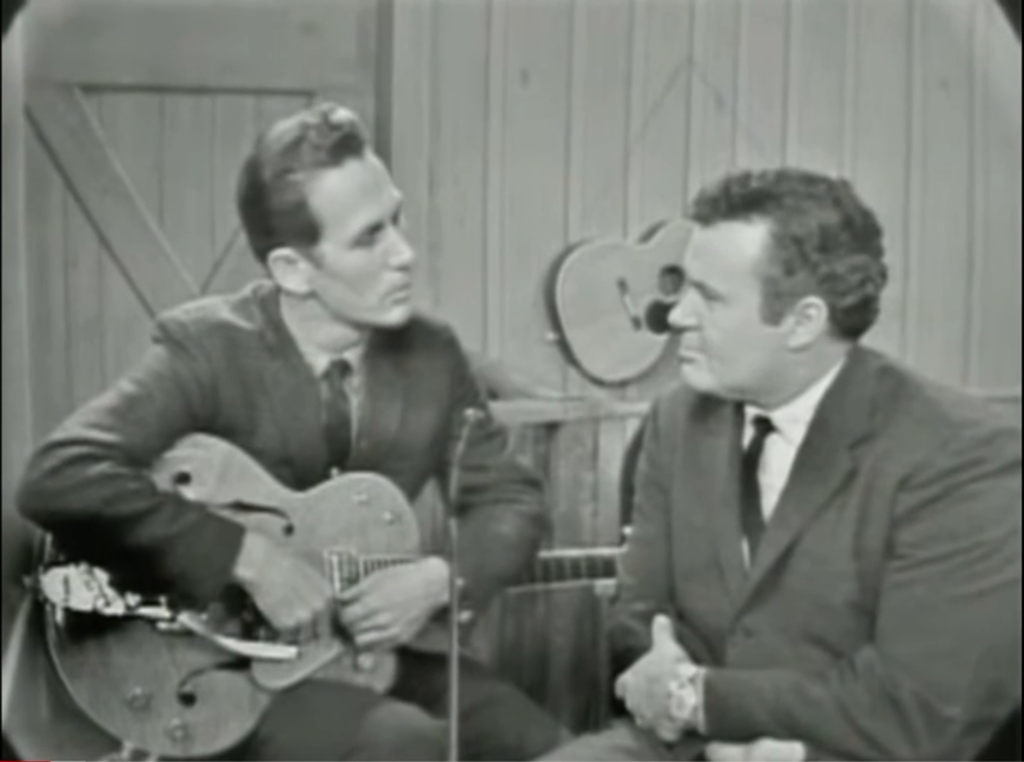
When tracking the expansive historical architecture of mid-century American television, certain rare broadcast fragments emerge as profound, absolute sanctuaries of musical heritage and cultural charm. For dedicated purveyors of string music history, few archival discoveries carry the joyful weight of a newly unearthed, vintage black-and-white television segment filmed live on the hallowed stage of WSM’s Grand Ole Opry. Shared through the meticulous curation of passionate vintage music channels like daffydoug chestergroovin, this spectacular, rare tracking captures a brief, warmhearted interview with the master himself, Chester Burton Atkins, before he effortlessly segues into a dazzling solo guitar performance of the Latin-jazz standard, “The Peanut Vendor” (“El Manisero”). Operating with the quiet humility that defined his life, “Mr. Guitar” stripped away the standard variety-show pretense—leaving the international listening community with an unvarnished, high-fidelity testament to the golden era of analog television broadcasting.
The monumental historical context surrounding this specific live television tracking highlights a transformative period when traditional Appalachian fingerstyle playing was cross-pollinating with sophisticated international rhythms. Originally composed by Cuban pianist Moisés Simons in the late 1920s, “The Peanut Vendor” became an explosive global phenomenon that ignited the Rumba craze across North America and Europe. When Chet brought this complex Afro-Cuban syncopation to the historic stage of the Grand Ole Opry—the absolute epicenter of country music tradition—it was nothing short of a creative revelation. Captured beautifully in glorious, high-contrast black and white, the vintage broadcast mix represents a magnificent victory of early live sound engineering, perfectly isolating the crisp snap of Chet’s thumbpick and the natural, wooden resonance of his semi-hollowbody Gretsch guitar so that every rapid-fire run decays with pristine technical clarity.
The behind-the-scenes charm of this rare archival clip lies in the striking contrast between Chet’s deadpan, gentlemanly television presence and the sheer, mind-boggling complexity of his musical execution. The segment begins with an intimate, conversational interview where the announcer engages Atkins in lighthearted banter, showcasing the dry, self-deprecating wit that made the native Tennessean as beloved a personality as he was a musician. While many vintage country television interviewers of the era—ranging from iconic Opry hosts like T. Tommy Cutrer to regional broadcast veterans—frequently stepped into the frame to guide the show, Chet remains the undeniable anchor of the space. The moment he finishes speaking and looks down at his fretboard, the playful conversation completely transforms into a masterclass of absolute rhythmic independence, as he introduces a syncopated, rolling baseline that instantly mimics the bustling energy of a Havana street market.
For the serious musicologist who treasures the deep technical nuances of classic fingerstyle mechanics, Chet’s physical execution on “The Peanut Vendor” remains an absolute revelation. Navigating the song’s fiery Latin pulse requires an extraordinary degree of finger flexibility, flawless pitch stability, and an innate, pocket-perfect sense of timing—demands that the legendary vanguard met with astonishing, commanding ease. Utilizing his iconic thumb-and-three-fingers approach, Atkins simultaneously drives a driving, syncopated rumba rhythm bed on the bass strings while his fingers pluck out the cascading, horn-like lead counter-melodies across the treble strings. The raw human element, the occasional visible squeak of fingers moving across pristine nickel frets, and the absolute lack of modern digital Cosmetics create an authentic intimacy that computer-generated production software simply cannot duplicate.
To re-engage with this magnificent, rare Grand Ole Opry broadcast tracking today is to be swept away by a powerful, deeply comforting wave of sweet nostalgia and profound gratitude. Watching and listening to our hero effortlessly command his instrument transports the educated viewer back to a highly sophisticated era of entertainment history—a time when true, enduring stardom required no synthetic enhancements to command our deepest admiration. For the dedicated subscribers and scholars who spend years searching the archives to preserve these priceless musical snapshots, this clip serves as a permanent, highly reflective blessing. It leaves the global community with a timeless reminder that when a beautiful melody is delivered straight from the passionate, resilient soul of a true legend, its magic possesses an immortal strength that will continue to cross generations, warm our hearts, and shine forever.