
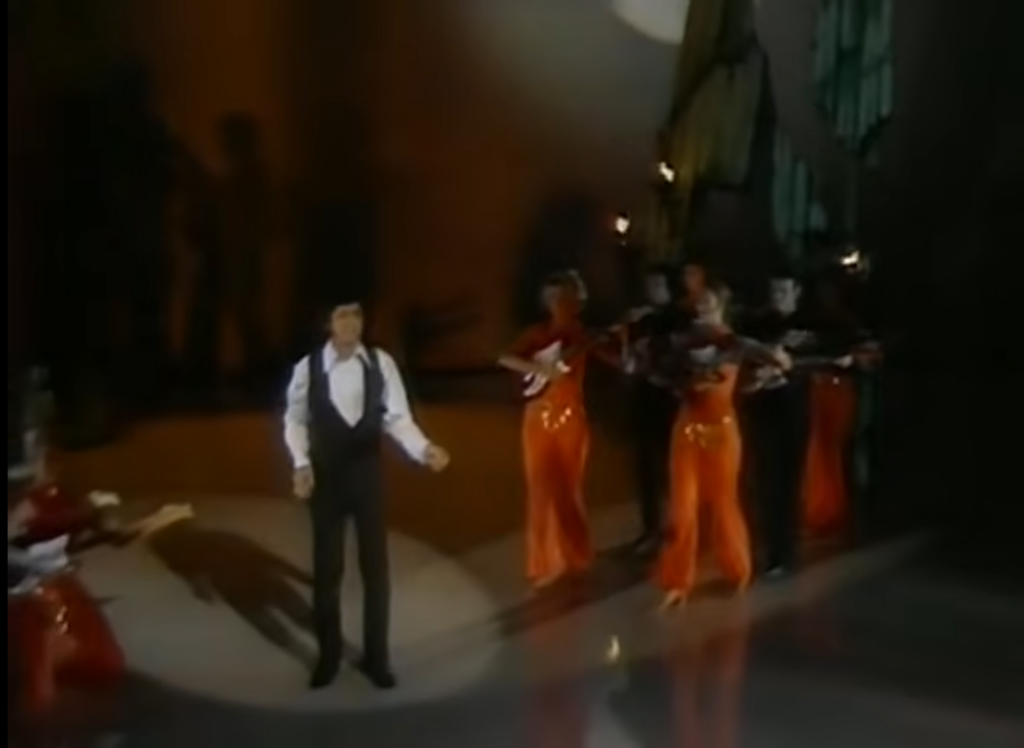
The Anthem of the Common Man: Engelbert Humperdinck and the High-Fidelity Jubilee of “Ten Guitars” Live on His 1970 Variety Show
When mapping the global, multi-generational impact of traditional British pop music, certain iconic recordings emerge as definitive monuments to rhythmic joy, collective celebration, and pure, unadulterated crowd synergy. A spectacular peak in this performance tradition was brilliantly captured on the evening of March 4, 1970, during a high-energy broadcast of The Engelbert Humperdinck Show. Stepping up to the television microphones under vibrant studio lights, “The King of Romance” delivered a roaring, high-fidelity live tracking of his legendary signature piece, “Ten Guitars.” Preserved beautifully for cultural music archives by ITC Entertainment, this rare 1970 showpiece documents Humperdinck unleashing an infectious, dance-infused anthem that would transcend its original release to become a profound cultural phenomenon—leaving the international listening community with a timeless performance layout that highlights the absolute peak of golden-era variety showmanship.
The unique creative and historical context surrounding this March 4, 1970 broadcast captures an era when traditional vocal pop arrangements possessed a driving, roots-oriented acoustic power that could unite listeners across continents. Originally written by Engelbert’s brilliant, longtime manager Gordon Mills—who also famously penned massive hits like Tom Jones’ “It’s Not Unusual”—“Ten Guitars” was initially released as the B-side to Humperdinck’s historic 1967 multi-million-selling global chart-topper, “Release Me.” Despite its B-side status, the track’s propulsive, sing-along melody took on a legendary life of its own, transforming notably into an unofficial national anthem in places like New Zealand, where it became a cornerstone of Maori guitar party culture. When Engelbert brought this beloved composition to his weekly television series in the spring of 1970, the production team spared no creative expense—delivering a flawless victory of live analog audio engineering that isolated his powerful, rich baritone upfront while spreading a massive, swinging big band expansively across the stereophonic frequency spectrum.
The behind-the-scenes fascination of this live variety television arrangement lies in the brilliant, escalating wall of sound woven between the rhythm section and the horn players. The performance opens with immediate, commanding authority, as a driving, syncopated acoustic guitar pattern and a snappy, walking bassline establish the song’s unmistakable, folk-pop rhythmic pocket. Rather than keeping the production sparse, the live television mix masterfully and expansively unfolds as the track speeds toward the main chorus. A magnificent layer of soaring, clean brass fanfares and punchy live percussion steps forward to cradle Engelbert’s primary vocal line—replicating the joyous, campfire-like camaraderie of ten acoustic guitars strumming in perfect, organic unison.
For the serious musicologist who treasures the deep technical nuances of classic vocal health, breath control, and traditional phrasing, Humperdinck’s physical execution during this 1970 ITC television broadcast remains an absolute revelation. Navigating a fast-paced, highly rhythmic melody while maintaining a relaxed, conversational ease requires exceptional core stamina and precise dynamic control—demands that the veteran entertainer met with his trademark gentlemanly poise and an infectious sense of showmanship. Moving dynamically across the television set, he leans into the natural warmth, crisp diction, and booming resonance of his multi-octave range, projecting an unvarnished honesty that modern, computer-sequenced pitch software simply cannot duplicate.
To turn the volume all the way up and re-engage with the pristine, historic textures of this magnificent March 4, 1970 television delivery today is to be swept away by a powerful, deeply comforting wave of sweet nostalgia and profound gratitude. Watching and listening to this premier vanguard effortlessly ignite the studio audience with his iconic, magnetic charisma transports the educated viewer back to a highly sophisticated era of entertainment history—a time when true, enduring stardom required no artificial enhancements to command our deepest admiration. For the dedicated collectors and scholars who spend lifetimes archiving these priceless television artifacts, this ITC broadcast remains a permanent, highly reflective blessing. It leaves the global community with a beautiful, timeless truth: that when a joyous melody is delivered straight from the passionate, resilient soul of a true legend, its magic possesses an immortal strength that will continue to cross generations, warm our hearts, and shine forever.