
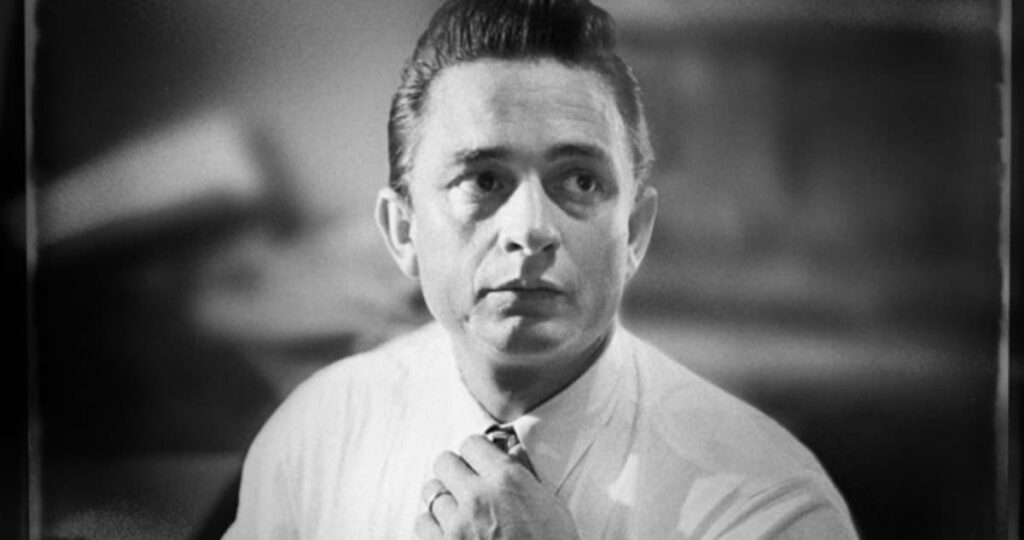
A solemn tribute to mortality and frontier justice The Ballad of Boot Hill mourns the price of the gun
Johnny Cash’s The Ballad of Boot Hill is a haunting narrative ballad that reflects on the tragic final resting place of Wild West gunmen, blending history, regret, and a sobering meditation on death and justice.
Released initially in 1959 on a Columbia EP titled Johnny Cash Sings ‘The Rebel Johnny Yuma’, the song later found a more permanent home on his 1965 conceptual double album Sings the Ballads of the True West. While Boot Hill was never issued as a major chart-topping single, its power lies in its narrative depth rather than commercial success. The album itself, released by Columbia Records, is a deeply felt tribute to Western lore, featuring ballads of heroes, outlaws, and the rugged landscape of the American frontier.
Behind this mournful song is a collaboration between Cash and his friend Carl Perkins, who composed the piece. Perkins, known for his rockabilly roots, crafted the lyrics that Cash would deliver with his signature gravitas. The song’s subject is the Gunfight at the O.K. Corral in Tombstone, Arizona, and specifically the fate of those men who were buried in Boot Hill Cemetery the famed graveyard “where men died with their boots on.”
From the very first lines “Well, my name it is not important” Cash sets a tone of universality, as though the story he tells could belong to any one of those men laid to rest in Boot Hill. He speaks of Tombstone now silent, the jailhouse empty, and the graves standing under moonlight, conjuring an atmosphere thick with memory, sorrow, and the echo of gunfire long past.
The narrative centers on Billy Clanton, one of the figures killed in the legendary shootout. Cash’s lyrics suggest sympathy for Clanton, framing him as a man caught in the violence rather than a purely villainous outlaw. Lines like “rope-marks on the oak tree are now petrified” evoke the brutal finality of frontier justice, while the repeated invocation of Boot Hill emphasizes how death came swiftly and left its mark forever.
Cash’s delivery is deeply emotional, his voice low and steady, imbued with a reflective sadness. His performance doesn’t glorify the shootout or the violence instead, it pays gentle but unflinching tribute to the impermanence of life in that lawless era. The music itself is spare, allowing the story to take center stage; subtle guitar, restrained rhythm, and a mournful tone support Cash’s narrative without overwhelming it.
More than just a history lesson, The Ballad of Boot Hill is a meditation on mortality and legacy. It asks listeners to consider the cost of living by the gun: the men who died young, the lives cut short, and the dusty cemetery where their stories lie. There is also a darkly ironic touch in the lyrics: Cash mentions the name Les Moore, with the lines, “Here lies Les Moore, four slugs from a forty-four, no Les, no more,” blending grim humor and blunt poetic justice.
The concept of Boot Hill itself carries symbolic weight: historically, “Boot Hill” cemeteries in the Old West were resting places for those who died violently, often with their boots on the poorest, the outlaws, the forgotten. By evoking that image, Cash is not only telling a tale of death but reminding us how death in that era was often swift, public, and final.
While The Ballad of Boot Hill might not have dominated the charts, its resonance has endured across decades. It appears on several of Cash’s collections including The Essential Johnny Cash 1955–1983 and remains a favorite among fans who admire Cash’s skill as a storyteller, not just as a singer.
Listening today, one hears not just the history of Tombstone, but a deeply human reflection on how violence shapes lives how men live with risk, regret, and legacy, and how their stories, ultimately, are carried by the songs that remember them. In Johnny Cash’s voice, the quiet voices of the past echo, reminding us of the fragility of life, the certainty of death, and the haunting beauty of a world gone by.
 Oldies Songs