
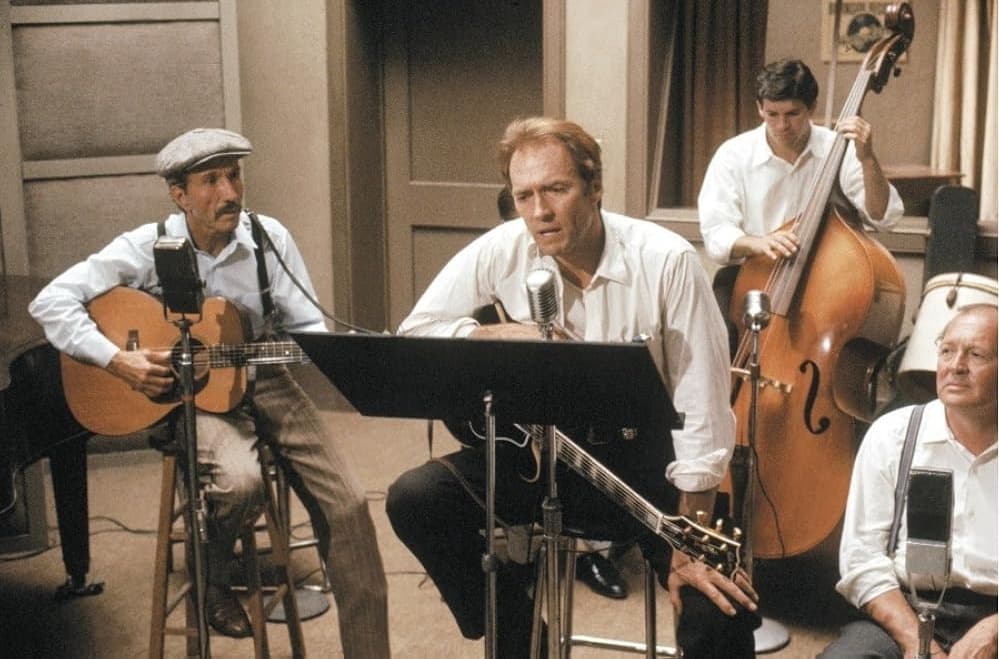
A restless heart confronts the shadows of the neon barroom that once defined him
When Marty Robbins released Honky Tonk Man in 1982 on his album Some Memories Just Won’t Die, the song marked one of the final chapters in a storied career that had already shaped the landscape of country and Western music for more than two decades. Although it did not chart with the impact of his classic singles, its place within Robbins’s late-career catalog is unmistakable: a reflective return to the honky-tonk archetype, delivered by an artist who understood its emotional terrain more intimately than most. At a time when country radio was shifting toward slicker production and contemporary pop influences, Robbins stepped back into a grittier world of smoke, regret, and midnight temptation, giving it the depth and gravity of a man who had lived long enough to truly reckon with the cost of its allure.
Honky Tonk Man functions as both character study and personal confession. Robbins had always possessed a rare gift for inhabiting the lives of the men he sang about, whether outlaws, gunfighters, or lovelorn drifters. Here, he revisits the honky-tonk world not with youthful bravado, but with a seasoned eye. The narrator is no longer the carefree barroom regular of earlier eras. Instead, he is someone standing at the threshold between past and present, aware of how the honky-tonk promised escape but delivered consequences. Robbins’s voice in this 1982 performance carries a maturity that deepens the song’s emotional weight. Every phrase is tinged with the knowledge that desire, loneliness, and ritual self-distraction often intertwine in ways that shape a man’s life long after he leaves the bar behind.
Lyrically, the song holds to the traditional motifs of honky-tonk storytelling: the pull of the nightlife, the stubborn persistence of impulse, and the tension between personal longing and destructive habit. Yet Robbins infuses these themes with a sense of introspection that lifts the track above cliché. He does not romanticize the honky-tonk. Nor does he condemn it. Instead, he captures its role as a magnetic force in the lives of men who seek solace where the lights are low and the music loud enough to cover their doubts. By 1982, Robbins’s vocal delivery had gained a velvety gravity that made even the simplest lines feel lived-in, turning what could have been a straightforward barroom tune into a meditation on aging, desire, and the pull of old habits.
What gives Honky Tonk Man its lasting resonance is the way Robbins frames the honky-tonk not as a place, but as a state of memory. The performance carries a gentle ache the ache of looking back at roads taken and roads avoided, at the younger self who once believed those nights could last forever. In this late-career offering, Robbins reminds us that the honky-tonk myth is not sustained by neon signs or rowdy crowds, but by the hearts of the men who walk through its doors searching for something they cannot name. And when Marty Robbins sings of that world, even in 1982, he does so with the authority of a man who understands exactly what it has given and what it has taken away.
 Timeless Melodies
  Oldies Songs