
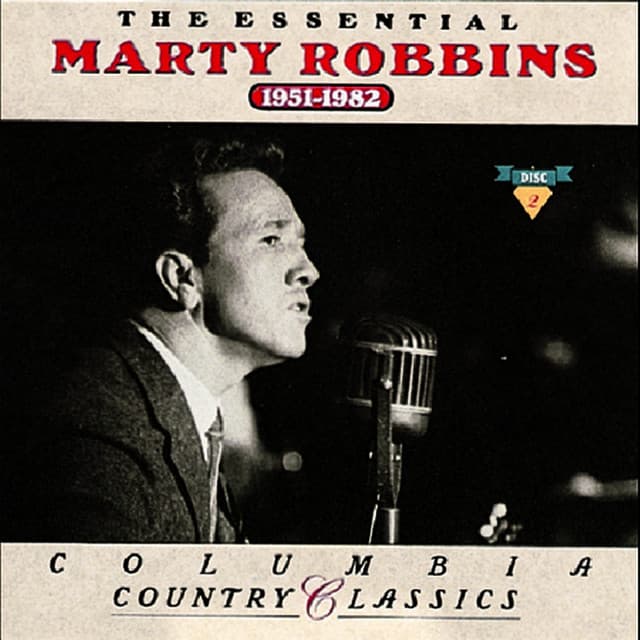
“Ribbon of Darkness” — a quiet sorrow wrapped in moonlight, a heart’s shadow drawn across the soul
When you listen to “Ribbon of Darkness” by Marty Robbins, you feel the slow fall of night — a hush, a memory, a grief so gentle it settles like dust on old photographs.
At the forefront: Robbins released “Ribbon of Darkness” as a single on March 22, 1965, under Columbia Records. Almost immediately, the song climbed the country charts — it became his eleventh No. 1 hit on the U.S. Billboard Hot Country Singles chart, topping the list for one week, and remained on the chart for nineteen weeks in total.
Behind those numbers lies something deeper: the song itself was written by Canadian folk singer Gordon Lightfoot — a young songwriter then rising quietly in the folk world. Marty Robbins, already an eminent figure in country music, chose to record Lightfoot’s elegiac ballad, transforming it into something both familiar and new: country in heart, folk in spirit, aching in soul.
Listening to Robbins’s version, what strikes first is how unadorned it remains. There is no glitter, no dramatic flourish. The arrangement is minimal — a gently finger-picked guitar, subtle backing, quiet breathing between lines. It feels as though the studio walls themselves leaned in to listen. That spare sound allows the melody to shimmer like fragile glass and the lyrics to hang heavy in the air. The “ribbon of darkness” is at once metaphor and presence: a shroud over memories, a shadow where light once lived.
The lyrics paint a landscape of loss: a love departed, a world emptied, nights that stretch too long. Robbins sings of tears never shed before, clouds gathering, meadows turned cold and silent. The sorrow is quiet, but its weight is unmistakable — not the dramatic heartbreak of sudden tragedy, but the lingering grief of absence, the slow ache of what once was sunshine now turned to dusk.
The context magnifies its poignancy. By 1965, country music was shifting: some artists embraced the polished “Nashville Sound,” others veered toward pop-crossover, but Robbins remained true to his path. He was known for ballads of the West, stories of guns and deserts, love and loss — yet with “Ribbon of Darkness,” he ventured into more introspective terrain, blending folk sensibility with country soul.
Interestingly, the song stands out in his discography because it is one of the rare No. 1 hits he recorded that he did not write himself. That choice speaks to his ear for depth, for songs that carry emotional weight beyond genre boundaries.
Over time, “Ribbon of Darkness” grew into more than a chart success — it became a quiet refuge in the catalog of American country-folk music. Its simplicity and sincerity allowed listeners to feel, to remember, to grieve, and to hold close the memories that time tries to soften. Robbins’s voice, gentle yet firm, becomes a companion for lonely nights, for empty rooms, for hearts still learning how to heal.
For those who have known long roads, faded photographs, loves lost to time — this song speaks with the voice of memory. There’s no promise of return, no grand reconciliation. Just truth: that loss lingers, that sorrow endures, and that sometimes the only solace is in letting the darkness wrap around you gently, like a ribbon, so you don’t have to fight it alone.
Decades on, “Ribbon of Darkness” remains a testament to the power of restraint — of telling heartbreak not with shouts, but with softness, not with fireworks, but with a quiet breath and a faithful whisper. And in that quiet, many still find their own stories, their own nights, their own slow-burning hopes.
 Oldies Songs