
A Stark Ballad of Honor and Consequence, Where Duty Stands Alone Against the Human Cost
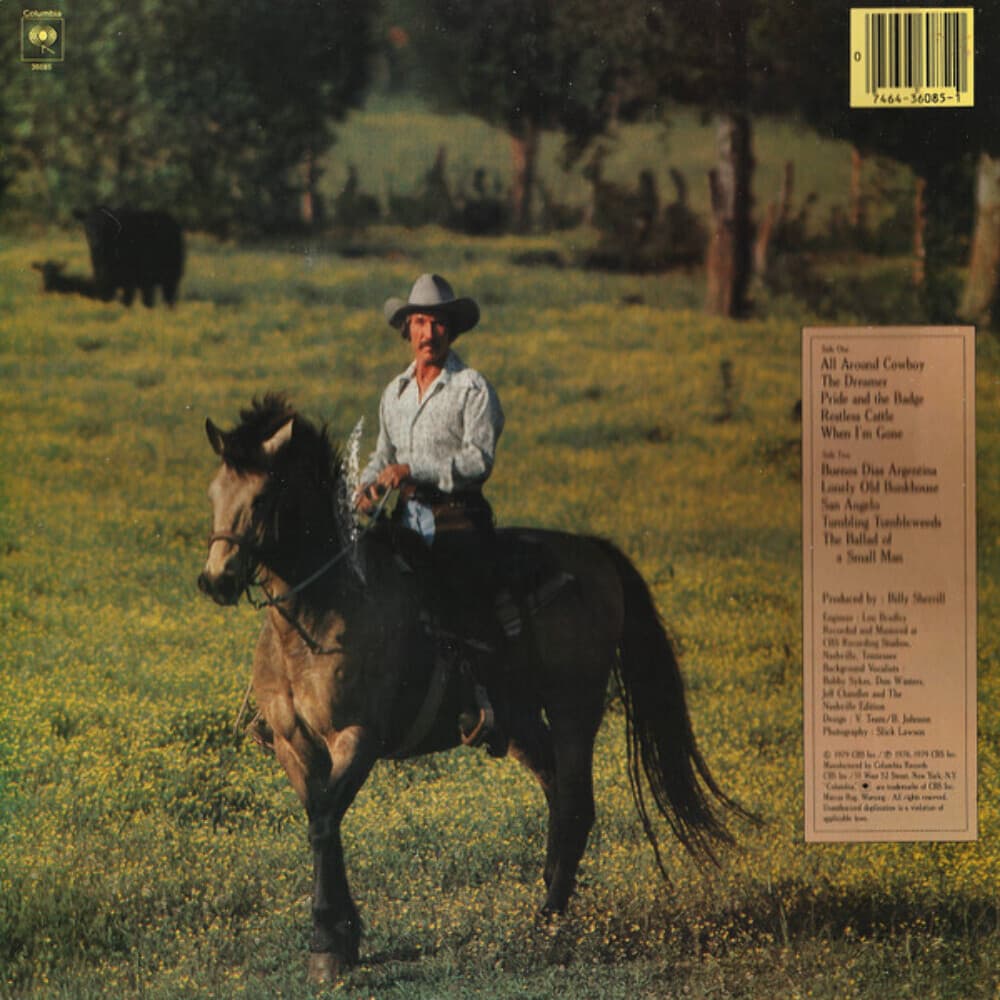
When Marty Robbins recorded “Pride and the Badge”, he returned once more to the moral frontier that defined so much of his most enduring work. Released in 1969 on the album I Walk Alone, the song did not chart on the Billboard Hot 100 nor the country singles charts upon release. Yet, as with many of Robbins’ narrative recordings, commercial position was never the measure of its weight. Its importance lies in its subject matter, its restraint, and its willingness to confront uncomfortable truths without spectacle.
By the late 1960s, Marty Robbins was already firmly established as one of country music’s greatest storytellers. While he was widely celebrated for Western epics like “El Paso”, “Big Iron”, and “Running Gun”, Robbins’ gift was not confined to gunfighters and deserts. He possessed a rare ability to step into any moral landscape and illuminate it from the inside. “Pride and the Badge” is one of his most sobering examples—a song that examines authority, justice, and personal conscience through a quiet, almost weary lens.
At its core, “Pride and the Badge” is a song about responsibility and the isolation that often accompanies it. The “badge” represents law, order, and duty, while “pride” suggests the internal code that compels a man to stand by that duty, even when the cost is deeply personal. Robbins does not romanticize the role of authority. Instead, he portrays it as a burden carried alone, where right and wrong are rarely cleanly separated.
Musically, the arrangement is deliberately sparse. There are no dramatic flourishes, no cinematic build. The instrumentation stays grounded, allowing the narrative to unfold with clarity and gravity. This simplicity mirrors the song’s emotional tone: direct, controlled, and unembellished. Robbins understood that this story required space rather than ornamentation.
Vocally, Marty Robbins delivers the song with a calm, steady presence that borders on solemnity. There is no anger in his voice, no overt judgment. Instead, he sings like a witness recounting events that have already settled into memory. This emotional distance is crucial. It allows the listener to engage with the ethical weight of the story rather than be guided toward an easy conclusion.
Lyrically, the song explores the collision between personal feeling and professional obligation. The badge demands loyalty to law above all else, while pride insists on integrity—yet the two are not always aligned with compassion. Robbins leaves room for ambiguity, resisting the urge to frame the narrator as either hero or villain. In doing so, “Pride and the Badge” becomes less a story about enforcement and more a meditation on consequence.
Within the album I Walk Alone, the song fits naturally among themes of solitude, moral reckoning, and inner conflict. The album itself marked a reflective period in Robbins’ career, moving away from chart-driven singles and toward introspective material. “Pride and the Badge” stands out as one of its most quietly powerful moments, precisely because it refuses to comfort.
Historically, the song emerged during a period of cultural tension, when authority and accountability were being questioned across society. Robbins does not reference specific events, but the atmosphere of uncertainty is unmistakable. The song’s strength lies in its universality—it speaks to any era in which duty demands difficult choices, and where the cost of those choices lingers long after the decision is made.
What makes “Pride and the Badge” endure is its honesty. It does not offer resolution. It does not reassure. Instead, it acknowledges that some roles require sacrifices that cannot be shared or undone. Robbins treats this truth with respect, allowing silence and understatement to carry as much meaning as the words themselves.
In the broader scope of Marty Robbins’ legacy, the song reinforces his reputation as a singer unafraid of complexity. He did not merely tell stories for entertainment; he used them to explore character, ethics, and human limitation. “Pride and the Badge” may never have been a hit, but it remains one of his most thoughtful recordings.
In the end, the song lingers not because of melody alone, but because of the questions it leaves behind. It reminds us that authority carries weight, that pride can be both strength and burden, and that some decisions, once made, become permanent companions.
Like many of Robbins’ finest works, “Pride and the Badge” does not fade quickly. It stays quietly present measured, reflective, and unresolved much like the duty it portrays.
 Oldies Songs