
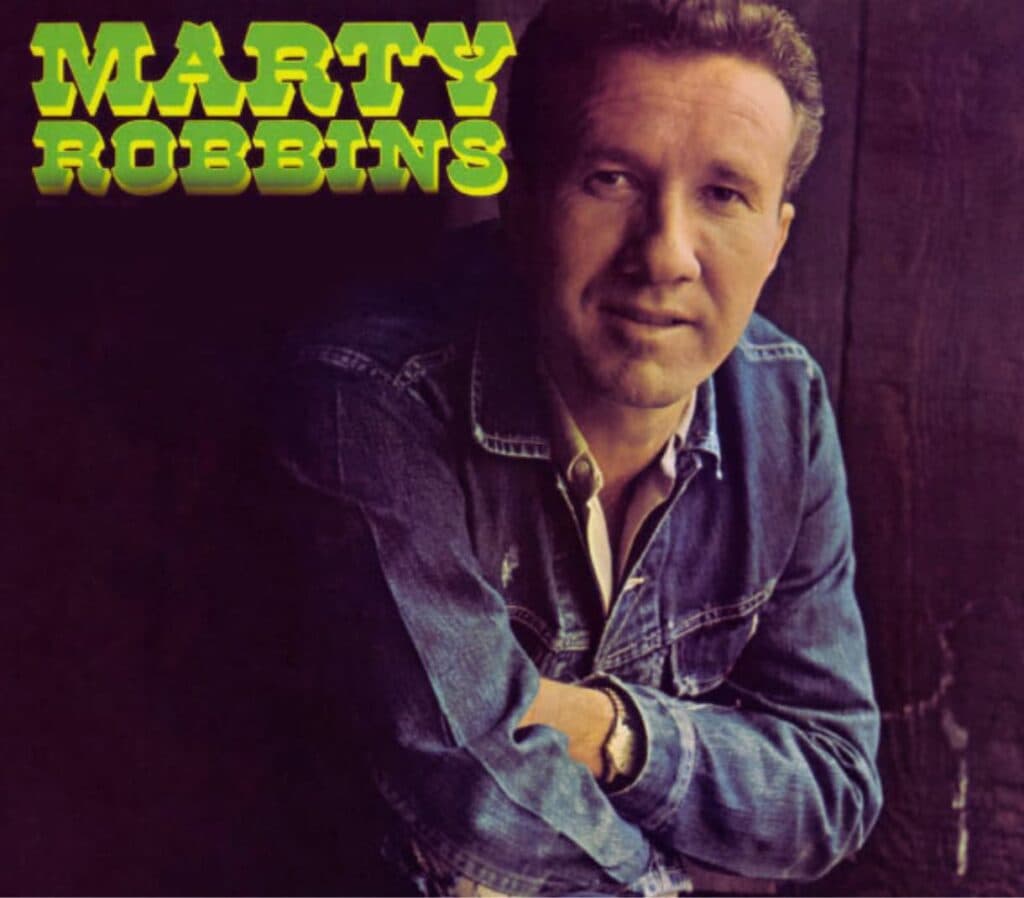
A wistful hymn to freedom “Saddle Tramp” by Marty Robbins
“Saddle Tramp” is a heartfelt tribute to the wanderer’s soul, where Marty Robbins gives voice to a drifter who rides beneath open skies, unbound by convention yet quietly aware of what he leaves behind.
Though not released as a major chart-topping single, “Saddle Tramp” holds a special place in Robbins’s catalog as part of his legendary Gunfighter Ballads and Trail Songs album, which was released in September 1959 and peaked at #6 on the U.S. Pop Albums chart. The album itself, produced by Don Law and recorded in a single intense session, is considered one of Robbins’s finest, weaving stories of the Old West with both grit and grace.
In “Saddle Tramp,” Robbins steps into the boots of a man who has chosen the road over roots. He sings, “They call me a drifter, they say I’m no good … I may be a drifter and I may be no good, there’s joy in this song that I sing.” With those words, he acknowledges the judgment of society but refuses its limitations he finds his own worth in the horizon, in the open wind, in the untethered life he leads.
The meaning of the song centers on freedom, independence, and the quiet, sometimes lonely contentment of living without constraints. Robbins’s “saddle tramp” represents someone unafraid to be truly himself, unafraid to choose a path less traveled. He rests “’neath a blanket of blue” at night, suggesting both a literal openness and a symbolic peace under the sky.
Yet, this drifter is not without longing. In his solitude, he dreams of a lady he once knew “I might even whisper her name” but he also knows that love, for all its sweetness, cannot tie him down. The image of him potentially revisiting Idaho or riding “back through Phoenix” reveals a heart that carries both memories and a fierce commitment to freedom.
Musically, the track is classic Marty Robbins: restrained but evocative. The arrangement is understated, with gentle guitar lines that evoke the cadence of a horse’s hoof, and backing vocals that feel like distant campfire harmonies. Robbins’s baritone is rich yet reflective, perfectly matching the mood of a man at peace with his wandering.
The “saddle tramp” in Robbins’s song stands for a timeless archetype the lone rider who refuses to be branded or constrained. According to interpretations, he will not be “tied down … trapped by a fair lady’s smile.” It’s not that he doesn’t desire companionship, but his freedom is more sacred: he would rather ride forever than be caught in a life that demands more than he’s willing to surrender.
For listeners who remember the days when Western ballads echoed through vinyl speakers late at night, “Saddle Tramp” carries a familiar nostalgia: the ache of the open road, the whisper of wind over dusty trails, and a quiet solitude that feels both brave and heartbreaking. It speaks to those who understand the paradox of a wandering heart that sometimes, the bravest thing is not to stay, but to ride on, wherever the trail may lead.
In the end, Marty Robbins didn’t just write a song about a cowboy; he gave us a meditation on what it means to be free. “Saddle Tramp” echoes long after the last note fades a reminder that some souls belong not to a place, but to the journey itself.
 Oldies Songs