
A lonely showdown on a dusty street: courage, fate, and the weight of the law
There’s a certain stillness when Marty Robbins begins “Big Iron” — a quiet tension that feels almost cinematic, as though the desert itself is holding its breath. Released in October 1960 on his landmark album Gunfighter Ballads and Trail Songs, the song climbed to No. 5 on the Billboard Country chart, but its true power isn’t in numbers. It’s in the way Robbins’ voice carries you straight into a sun‑baked Arizona town, where every eye is on the stranger riding in, and every heartbeat seems to echo the click of a gun being drawn.
The story of “Big Iron” is simple on paper, but breathtaking in execution. Robbins tells of a ranger, quiet and resolute, riding into the town of Agua Fria with one goal: to face the notorious outlaw Texas Red. Robbins’ lyrics are not just words; they are brushstrokes, painting the flickering tension of an Old West duel: the way townsfolk watch in fearful awe, the way a hand hovers near a holster, the slow, inevitable approach of justice. In Robbins’ world, the gun — the “Big Iron”” itself — is almost alive, a silent witness to the moral weight of the confrontation.
Listening to it, one can almost feel the heat of the sun on a worn leather hat, hear the crunch of boots on dusty streets, and sense the small townspeople holding their breath, knowing what is about to unfold. Robbins’ voice, warm yet authoritative, guides us through the story with the calm inevitability of someone who has seen the world and knows the cost of pride, recklessness, and courage. There is a poetry here, a quiet reflection on life, mortality, and the thin line between right and wrong.
The genius of Gunfighter Ballads and Trail Songs — and of “Big Iron” in particular — lies in Robbins’ ability to make history feel immediate and intimate. The duel isn’t just action; it is moral theater, a moment where character and fate collide. Robbins’ phrasing, his pauses, the way he stretches certain syllables, makes the listener feel as if they are part of the story — standing just beyond the saloon doors, the wind stirring the dust, waiting to witness the final act.
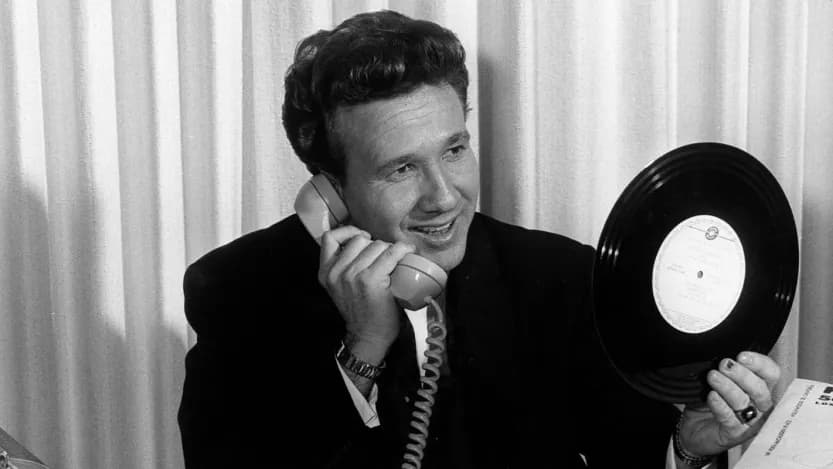
There is also a nostalgia here that cannot be overstated. For listeners of a certain age, “Big Iron” recalls evenings spent huddled around a record player, the warm hiss of vinyl blending with the imagined rattle of spurs and gunfire. It evokes a simpler time when stories of the West weren’t just tales — they were lessons, warnings, and quiet meditations on courage, consequence, and honor.
Even decades later, the ballad resonates. Its resurgence through modern culture, from films to online storytelling, has introduced Robbins to a new generation, but for those who remember its first spin, the song remains a gateway to memory. It conjures images of wide horizons, lonely riders, and the strange, lonely poetry of justice delivered with precision and calm.
Ultimately, Marty Robbins’ “Big Iron” is more than a country song. It’s a meditation on courage measured not in bravado but in resolve; a portrait of destiny riding into town, inevitable as the desert sun. It lingers in the mind long after the last note fades, a haunting and beautiful story told with warmth, grit, and a deep, reflective humanity. Robbins invites us not just to hear a ballad, but to step into the boots of a man whose life, for a few fleeting minutes, balances on the edge of a gun — and in that tension, we feel the pulse of timeless storytelling.
 Oldies Songs